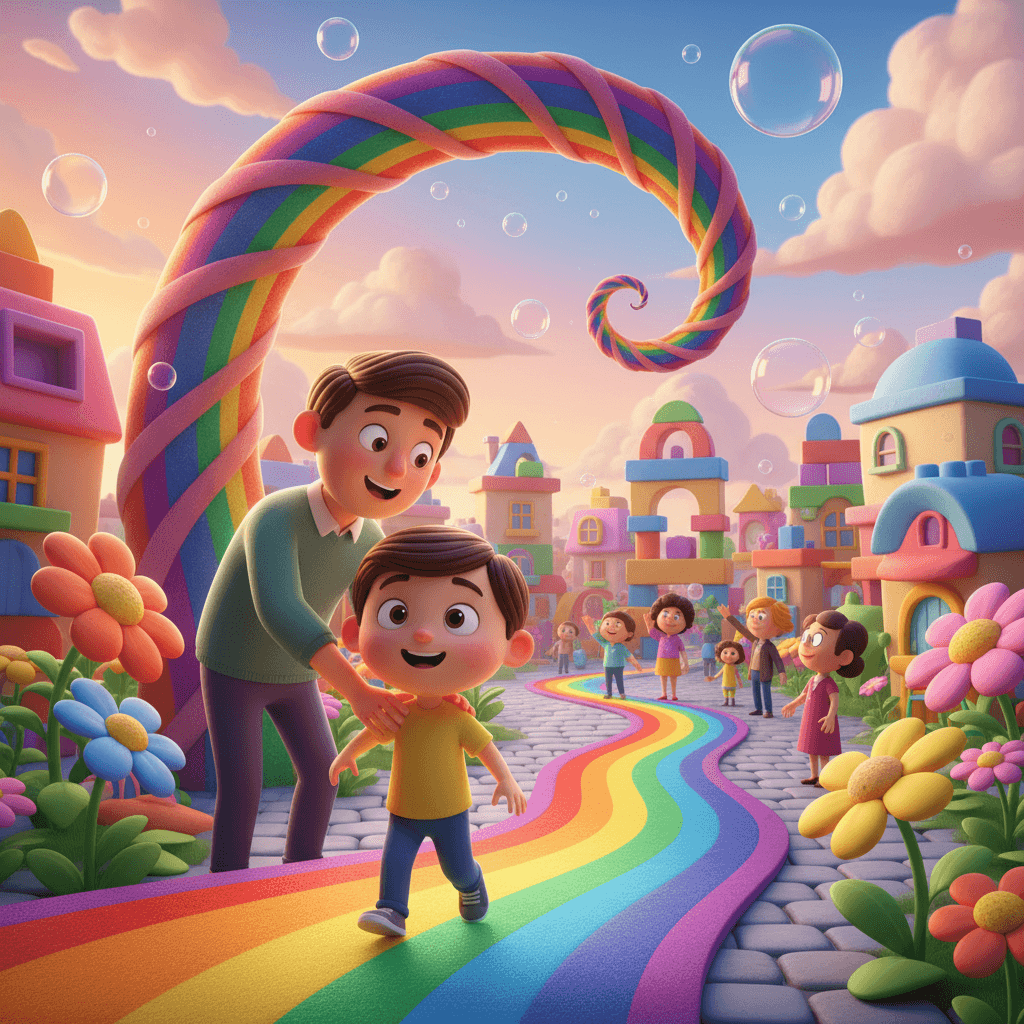
There is no anxiety quite like first-day-of-school anxiety — for children or for parents.
For children, it is the combination of everything unfamiliar at once: a new building, new adults, new rules, other children they do not know. For parents, it is watching a small person walk into that unfamiliarity without being able to follow them in.
A personalized first day of school storybook does something no pep talk can: it gives children a mental preview of the experience with themselves as the confident protagonist.
The Research on Story and School Transitions
Psychologists have studied school transition anxiety for decades, and the findings are consistent: children who can mentally rehearse an upcoming experience show significantly lower anxiety when the actual event arrives.
The mechanism is well understood. The brain cannot reliably distinguish between experiencing something and vividly imagining it — which is why mental rehearsal through story works. A child who has "walked through" a classroom door ten times in a story has already practiced the experience neurologically.
Personalization amplifies this effect substantially. When the child in the story is not just any child but visibly, recognizably the reader — when their name and face appear in the illustrations — the mental rehearsal becomes specific and personal rather than abstract.
Research on bibliotherapy (therapeutic use of reading) with children facing transitions consistently shows:
- Reduced self-reported anxiety before the event
- Faster adaptation in the first two weeks
- Stronger initial peer connections (children arrive with a mental model of "finding a friend")
- Greater trust in the adult caregivers (the story normalizes the teacher as safe)
What First-Day Stories Do Best
The most effective first-day school stories do three things:
1. Acknowledge the fear before resolving it. Stories that only show excitement feel dishonest to a child who is genuinely nervous. Starting with "Marcus felt nervous when he said goodbye to Mom" is more trusted than starting with "Marcus was so excited for school."
2. Show a specific moment of connection. The story works best when the child finds something or someone on their first day — a classroom feature they recognize, an activity they love, another child with a shared interest. This gives the child a concrete thing to look for.
3. End with belonging. The child should arrive home feeling like they belong in the new space. "This is my classroom now" is the feeling the story is building toward.
Story Ideas for Starting School
Browse the full collection at Lullaby's first day of school starters.
"My First Day of Kindergarten"
A classic first-day story with butterflies in the morning and discovery by afternoon. Flexible enough to fit any classroom setting and any child's personality.
"The Worry Cloud"
A child arrives with a worry cloud following them — a gentle acknowledgment of anxiety that transforms when they find their place. Good for children with higher anxiety or more sensitive temperaments.
"The Friendship Bridge"
A first-day story focused specifically on making the first friend. For children whose primary worry is social: "What if nobody wants to play with me?"
Writing a First-Day Prompt That Works
Include real details wherever you have them:
Instead of: "Aiden starts school and it goes well."
Try: "On his first day in Mrs. Chen's classroom, Aiden felt nervous when he said goodbye to Mom. He was worried nobody would want to sit with him at the craft table. But when he found the dinosaur books in the reading corner — his favorites — he sat down and started looking through them. A boy named Leo sat next to him and said 'I have that one at home.' That was how Aiden found his first friend at his new school."
If you know details, include them:
- Teacher's name
- Classroom features (art corner, books, sandbox, specific toys)
- Your child's specific worries (expressed in the story, then resolved)
- Other children's names if your child knows any classmates
- What your child is most excited about or most nervous about
The more specific the prompt, the more the story functions as an actual preview rather than a generic comfort.
The Week Before the First Day
A week before school starts:
- Create the storybook with as many real details as possible
- Read it together every day — at least once, ideally twice
- Talk about it: "In your story, Aiden found the dinosaur books. What do you think your classroom might have that you'll like?"
- Let the child carry it to school on the first day if they want to
The book is most powerful when it has been read enough that the mental rehearsal feels like memory. By the time the actual first day arrives, the child has already "been there" in the story multiple times.
What Happens After
Most children who receive a first-day storybook before starting school want to re-read it after their first week. The re-reading is different — they are now comparing the story to what actually happened, finding the moments that matched and the ones that surprised them.
This comparison is valuable. It shows children that they can anticipate and prepare for new experiences — a skill that will serve them through every transition that follows.
Browse first day of school story ideas →
Related Reading
- Best Personalized Children's Books in 2026 — All options for school-themed personalized books
- How to Write Great Story Prompts — Prompts that capture first-day emotions
- AI Picture Book for Kids Guide — Finding the right AI book tool for school milestones