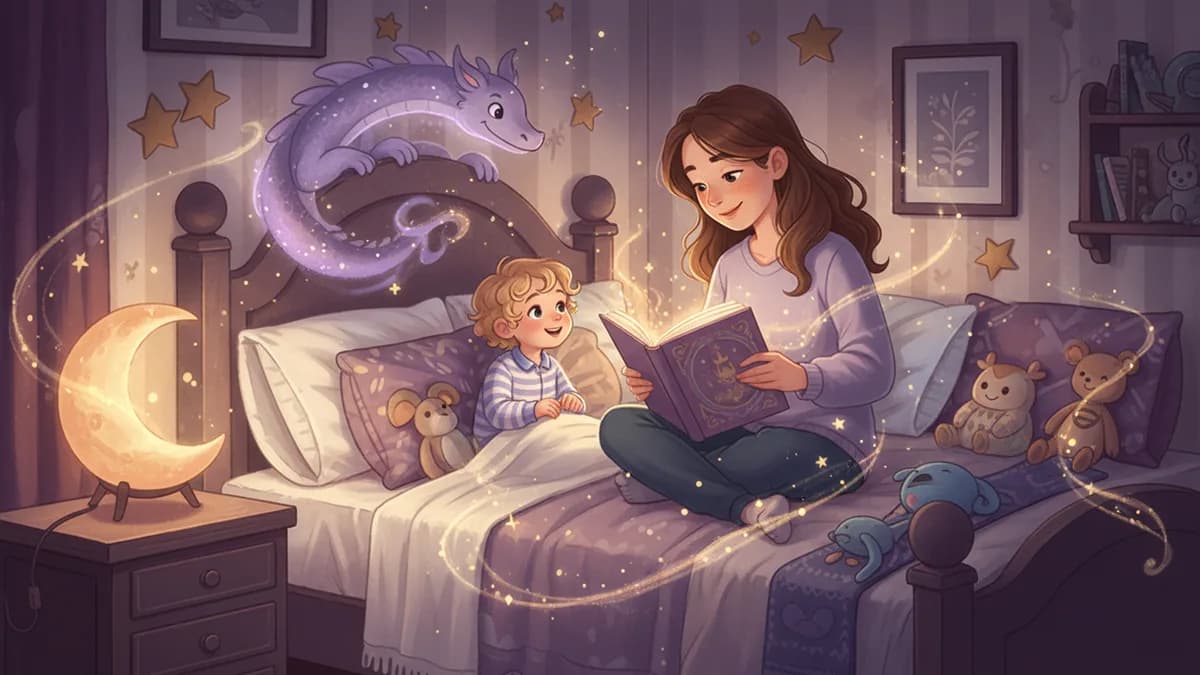
You've set the scene perfectly: cozy pajamas, dimmed lights, a beautiful picture book, and your cherubic child tucked into bed. You open to page one with a soothing voice: "Once upon a time..."
Your child immediately rolls off the bed, starts jumping, asks for water, and begins a detailed explanation of something that happened at school three weeks ago.
You try again. "Let's read! Come sit with me."
They sit. For approximately 8 seconds. Then they're upside down, hanging off the side of the bed, drumming their feet against the wall.
Sound familiar?
If traditional bedtime stories feel like wrestling an octopus into a straitjacket, you're not alone—and you're not failing. Some children are simply wired for movement, and forcing stillness doesn't just fail to work; it creates bedtime battles that make everyone miserable.
The good news? Bedtime stories don't require stillness. The magic of narrative, language development, and bonding can happen through dozens of alternative approaches that honor your child's need to move.
This guide explores why some kids can't sit still, how movement and stories can coexist, and creative alternatives that make bedtime storytelling work for active, energetic, sensory-seeking children.
Why Some Kids Can't Sit Still for Stories
Before trying alternatives, it helps to understand why your child struggles with traditional storytime:
Reason 1: High Energy Levels (Temperament)
What's happening: Some children are born with naturally high activity levels. They're not misbehaving—their baseline energy is just higher.
What it looks like: Constant movement (wiggling, bouncing, climbing), difficulty with any sedentary activity (not just reading), high physical stamina, needs less sleep than peers.
The science: Temperament research identifies "activity level" as an inborn trait. High-activity children need more physical outlet to feel regulated. Forcing stillness creates discomfort similar to asking a low-activity child to run marathons.
Reason 2: Sensory Processing Needs
What's happening: Some children are "sensory seekers"—they need more physical input (movement, touch, pressure) to feel calm and focused.
What it looks like: Crashing into furniture, requesting tight hugs, chewing on things, preferring to hang upside down, difficulty sitting in chairs even during meals.
The science: The vestibular system (movement and balance) helps regulate arousal. For sensory-seeking children, movement isn't distraction—it's a focusing tool. They literally think better while moving.
Reason 3: Developmental Stage
What's happening: Toddlers and preschoolers are developmentally wired for movement. Their gross motor skills are exploding, and their brains prioritize physical exploration over sitting still.
What it looks like: Age 2-4 children who can't sit for more than 2-3 minutes, constantly exploring, touching everything, climbing furniture.
The science: Executive function (impulse control, sustained attention) is still developing. Asking a 3-year-old to sit perfectly still is asking for a skill their brain hasn't matured into yet.
Reason 4: ADHD or Attention Challenges
What's happening: For children with ADHD, sitting still requires enormous cognitive effort—effort that then isn't available for listening to the story.
What it looks like: Fidgeting, interrupting, appearing not to listen but then accurately recounting the story, difficulty with sustained attention across all contexts (not just storytime).
The science: ADHD brains show differences in dopamine regulation. Movement stimulates dopamine production, helping with focus. Paradoxically, kids with ADHD may comprehend better when moving.
Important note: Not all active kids have ADHD, and ADHD looks different across children. Consult a professional if you have concerns.
Reason 5: Overstimulation from the Day
What's happening: After a stimulating day (school, activities, screen time), some children need physical release before they can calm down.
What it looks like: Hyperactivity at bedtime (the "bedtime crazies"), resistance to calming activities, second wind of energy right when you want them to wind down.
The science: Cortisol (stress hormone) can spike in the evening if children haven't had adequate physical release during the day. Movement helps metabolize cortisol.
Reason 6: Learning Style (Kinesthetic Learners)
What's happening: Some children process information best through physical experience. They're kinesthetic learners who need to DO rather than just HEAR.
What it looks like: Remembers things they acted out better than things they heard, struggles with lectures, learns to read by tracing letters with fingers.
The science: Learning styles research shows that kinesthetic learners activate more brain regions when combining movement with information intake, improving comprehension and retention.
Can Stories Work If Kids Are Moving?
Short answer: Absolutely yes.
The myth: Stories only "work" if children sit quietly and look at pictures.
The reality: The benefits of stories—language development, vocabulary, narrative comprehension, emotional processing, bonding—happen through listening, not sitting.
Research on Movement and Learning
Multiple studies demonstrate that movement doesn't impair learning—for some children, it enhances it:
-
University of Mississippi study (2021): Children allowed to fidget during listening comprehension tasks scored 25% higher than those required to sit still.
-
Journal of Abnormal Child Psychology (2020): Children with ADHD showed improved working memory performance when permitted to move during cognitive tasks.
-
Neuroscience research: Physical movement increases blood flow to the brain and activates multiple neural pathways, potentially improving encoding of information.
The Listening Test
How to know if your moving child is actually absorbing the story:
Pause mid-story and ask: "What just happened?" or "What do you think happens next?"
If they can answer accurately, they're listening—even while spinning in circles or building with blocks.
Movement as a Focusing Tool, Not a Distraction
For many children, movement helps rather than hinders attention:
Without movement: Brain focuses on "I need to move I need to move I need to move" (no bandwidth left for story)
With movement: Physical needs met → brain available for content
Think of it like adults who pace while on phone calls or doodle during meetings. Movement occupies the restless part of the brain, freeing up attention for the task.
Bedtime Story Alternatives That Embrace Movement
Alternative 1: Walking Story Time
How it works: Read the story while slowly walking together (around the house, up and down the hallway, in circles around their room).
Why it works: Gentle, rhythmic movement is calming (think of rocking babies) while satisfying the need to move.
Best for: High-energy kids, sensory seekers, ages 3-10
Pro tip: Use a predictable path (same route each night) to add ritual and routine to the activity.
Example: "We're going to read while we walk our bedtime path: start at your room, walk to the kitchen, circle the living room, and return to bed for lights out."
Alternative 2: Story Stretching/Bedtime Yoga
How it works: Read the story while the child does gentle stretches or simple yoga poses.
Why it works: Stretching releases physical tension while creating a natural wind-down. Combines movement with progressive calming.
Best for: Sensory seekers, children who need physical release, ages 4-12
How to structure:
- 1st page: Big stretch reaching for the sky
- 2nd page: Forward fold
- 3rd page: Cat/cow pose
- Continue with gentle poses through story
Resources: Look for "bedtime yoga for kids" videos to learn age-appropriate poses.
Alternative 3: Bath Time Stories
How it works: Read aloud while your child plays in the bathtub.
Why it works: Water play provides sensory input and movement outlet. Bath time naturally transitions to bedtime, creating a seamless routine.
Best for: Sensory-seeking kids, toddlers and preschoolers who love water, ages 2-7
Safety note: Always supervise bath time. Position yourself comfortably where you can read and maintain visual contact.
Pro tip: Use waterproof books or a device (carefully positioned away from splashes) for variety.
Alternative 4: Audio Stories with Calm Movement
How it works: Play audiobooks or audio stories while your child does quiet physical activities (coloring, building with soft blocks, playing with kinetic sand, organizing toys).
Why it works: Hands are busy (satisfying sensory needs), voice is soothing (language benefits), and activity is low-energy (preparing for sleep).
Best for: All active kids, especially those who resist read-alouds, ages 3-12
Platform suggestions:
- Audiobooks (library apps, Audible)
- Podcasts for kids (Stories Podcast, Circle Round)
- Personalized stories saved as audio files
Pro tip: Use noise-cancelling headphones if siblings share a room and need different wind-down activities.
Alternative 5: Sensory Story Bins
How it works: Create a bin with small objects related to the story. As you read, the child manipulates the objects.
Why it works: Tactile input satisfies sensory seeking, concrete objects help with comprehension, hands are busy while ears listen.
Best for: Sensory seekers, young children (ages 3-6), tactile learners
Example bin for ocean story:
- Blue rice or water beads (ocean)
- Small plastic fish
- Shells
- Small boat
How to use: As you read "The fish swam through the deep blue ocean," child moves fish through blue rice.
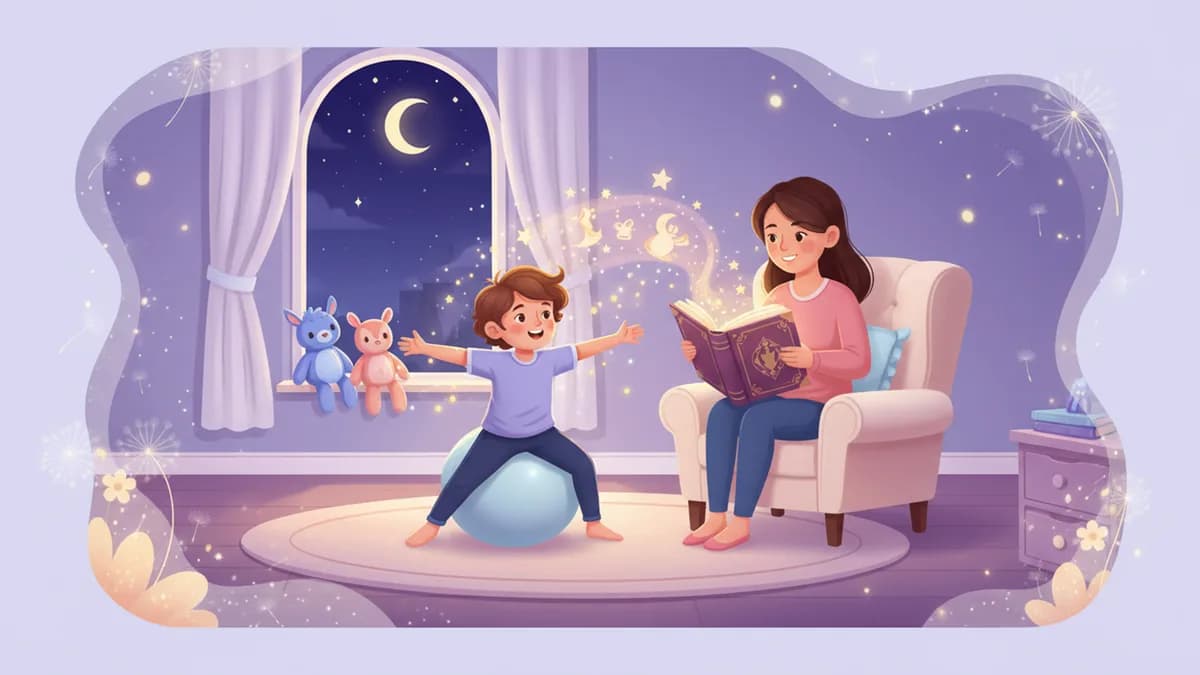
Alternative 6: Story Acting/Movement Stories
How it works: Child physically acts out the story as you read it.
Why it works: Maximum movement combined with deep story comprehension through embodiment.
Best for: High-energy kids, dramatic/creative children, kinesthetic learners, ages 3-8
How to structure:
- Before reading: "Let's act this out! You're going to BE the main character."
- As you read: Narrate while they perform actions ("Emma jumped over the river" = child jumps)
- Adjust intensity: Start active, transition to gentle movements as story progresses
Pro tip: Choose or create stories with a narrative arc from active (beginning) to calm (ending) for natural wind-down.
Alternative 7: Flashlight/Shadow Stories
How it works: Turn off lights, give child a flashlight. They shine it on the ceiling/walls while you read. Or use shadows (hand shadows, toy shadows) to illustrate the story.
Why it works: Hands busy with flashlight, visual engagement, novelty makes it special.
Best for: Visual learners, kids who resist traditional books, ages 4-10
Variation: Let them "illustrate" the story by shining light on related objects as you read.
Alternative 8: Story While Swinging/Rocking
How it works: Read while child gently swings (indoor swing, rocking chair, sit on exercise ball and bounce gently).
Why it works: Vestibular input (rocking/swinging) is incredibly calming for sensory systems. Rhythmic movement often leads to drowsiness.
Best for: Sensory seekers, children who need vestibular input, ages 2-8
Equipment options:
- Indoor swing (many attach to doorframes)
- Rocking chair child sits in
- Parent and child sit on large exercise ball
- Hammock (if you have one)
Alternative 9: Bedtime Story Podcasts/Videos (Device-Based)
How it works: Child watches story-based content designed for bedtime (calm animations, soothing narration) on a tablet or screen.
Why it works: Visual + auditory input, child can watch while in bed, content designed to calm.
Best for: Children who respond well to screens, families with multiple kids needing simultaneous bedtime, ages 4-12
Important screen considerations:
- Use blue light filters or "night mode"
- Position screen at least 3 feet from face
- Turn off 15-30 minutes before actual sleep time
- Choose content specifically designed for bedtime (not stimulating)
Recommendations:
- Calm app (children's sleep stories)
- Moshi Twilight (sleep stories for kids)
- YouTube channels with bedtime stories (vet for calm content)
Alternative 10: Personalized Digital Stories
How it works: Use AI-generated personalized stories on a device that the child can interact with (swipe pages, tap for sounds).
Why it works: Interactivity satisfies need for engagement, personalization increases interest, digital format allows adjustable pacing.
Best for: Tech-interested kids, reluctant listeners, ages 5-12
How to implement with Lullaby.ink:
- Create personalized story featuring your child
- Save story as PDF or view digitally
- Let child "read" on tablet (swiping pages provides gentle interaction)
- Personalization keeps them engaged even while fidgeting
Pro tip: Create a bedtime series featuring your child in progressively calmer adventures (first night: space adventure, by fifth night: gentle dreamland story).
How to Build a Movement-Friendly Bedtime Routine
Traditional bedtime routine: Bath → Pajamas → Brush teeth → Read quietly in bed → Lights out
Movement-friendly bedtime routine:
Phase 1: High Energy Release (30-45 minutes before bed)
Goal: Burn off remaining energy
Activities:
- 10 minutes of active play (dance party, pillow fight, chase)
- Physical games (Simon Says with big movements, animal walks)
- Outdoor time if weather permits (quick backyard play)
Why it matters: You can't force tired. Create tired through physical activity first.
Phase 2: Transition to Moderate Movement (20-30 minutes before bed)
Goal: Begin calming while honoring movement needs
Activities:
- Bath time (with or without bath stories)
- Walking story time (read while walking)
- Gentle stretching or bedtime yoga
- Story acting with decreasing intensity
Why it matters: Abrupt transitions don't work for high-energy kids. Bridge from active to calm.
Phase 3: Gentle Movement/Stillness (10-15 minutes before bed)
Goal: Final wind-down to drowsiness
Activities:
- Audiobook while coloring/fidgeting with quiet toy
- Sensory story bin
- Rocking while reading
- Flashlight stories in dim room
Why it matters: This is when drowsiness sets in if you've correctly progressed through phases.
Phase 4: Lights Out
Goal: Sleep
What's allowed:
- Small fidget toy in bed (quiet, non-light-up)
- White noise or continued audiobook at very low volume
- Gentle self-soothing movement (rocking, rubbing blanket)
What's not allowed:
- Getting out of bed
- Screens
- Talking/playing with siblings
Age-Specific Movement Story Strategies
Ages 2-4 (Toddlers/Preschoolers)
Developmental reality: Sitting still is neurologically difficult. Expect 5-10 minutes maximum.
Best alternatives:
- Bath time stories (combines sensory play + routine)
- Very short books with lots of acting out (The Very Hungry Caterpillar while pretending to eat)
- Walking story time (burn energy while bonding)
What won't work: Long books, forcing stillness, reading in bed (too much energy)
Expectations: They may only half-listen. That's okay. You're building routine and exposure to language.
Ages 5-7 (Early Elementary)
Developmental reality: Can manage 10-20 minutes of listening but many still need movement.
Best alternatives:
- Story stretching/bedtime yoga (combining literacy + physical activity)
- Audio stories while building/coloring
- Story acting out (comprehension through embodiment)
What won't work: Expecting them to sit perfectly still for chapter books
Expectations: They should be able to answer comprehension questions even while moving.
Ages 8-10 (Upper Elementary)
Developmental reality: Most can sit for stories, but high-energy/ADHD kids still struggle.
Best alternatives:
- Audiobooks with fidget toys
- Personalized digital stories they can control
- Silent reading time with gentle background music (independence)
What won't work: Babyish formats (no more acting out stories unless child-led)
Expectations: Shift toward independent reading. Stories don't have to be read TO them—offer alternatives that give autonomy.
Ages 11-12 (Tweens)
Developmental reality: Fully capable of stillness but may reject "baby" bedtime stories.
Best alternatives:
- Podcasts or audiobooks they choose (autonomy)
- Reading on devices (feels grown-up)
- Family read-aloud time earlier in evening (not forced bedtime activity)
What won't work: Insisting on parent-led storytime (may trigger resistance)
Expectations: Transition to self-directed evening routine. Offer story options; don't mandate format.
What If Nothing Works?
If you've tried multiple alternatives and bedtime stories still feel impossible, consider:
1. Move Stories to Another Time
Reframe: Bedtime doesn't have to include stories. Morning stories, after-school stories, or weekend story time can provide the same language and bonding benefits.
Why it works: Some children are too wound up at night. Morning calm might be their receptive time.
2. Prioritize Sleep Over Stories
Reality check: If story attempts delay sleep by 30+ minutes and create battles, skip them.
Why it matters: Sleep is more critical than stories for development. A well-rested child benefits more from daytime reading than exhausted bedtime reading.
3. Assess for Underlying Issues
When to get help:
- Child has never been able to sit/focus for age-appropriate durations (in any context)
- Movement seems involuntary/distressing to the child
- Sleep issues beyond just storytime (difficulty falling asleep, frequent waking, early rising)
- Extreme resistance to all calming activities
Who to consult:
- Pediatrician (rule out medical issues, sleep disorders)
- Occupational therapist (sensory processing evaluation)
- Child psychologist (ADHD/anxiety assessment if suspected)
4. Accept Your Child's Unique Needs
The truth: Not all children are "bedtime story kids." And that's okay.
Alternative bonding: If stories don't work, find what does—building Lego together, wrestling, music time, talking about the day.
What matters most: Connection and routine. The format is flexible.
Key Takeaways
- Movement and learning aren't opposites—many children focus better while moving
- Stillness isn't required for story benefits—language development, bonding, and comprehension happen through listening
- Test listening, not stillness—ask comprehension questions to verify engagement
- Match format to child—walking stories, yoga stories, bath stories, audio stories all work
- Phase energy down gradually—high-energy release → moderate movement → gentle wind-down → sleep
- Stories don't have to be at bedtime—morning or daytime stories count too
- Prioritize sleep over format—well-rested child > exhausted child who sat still for a book
Ready to End Bedtime Story Battles?
Stop forcing your active, energetic, sensory-seeking child into a traditional storytime mold that doesn't fit. Start honoring their need to move while still enjoying the magic of stories together.
With Lullaby.ink's personalized stories, you can create adventures specifically designed for your child—featuring them as the hero in narratives that match their interests and needs. Read while walking, listen as audio while they stretch, act out the story together, or let them interact digitally.
Create your first personalized bedtime story and discover that storytime doesn't require stillness—it requires connection. And connection happens in whatever format works for YOUR unique child.
Last updated: February 4, 2026. For more bedtime strategies, explore our bedtime routine guide by age and the science of bedtime stories.