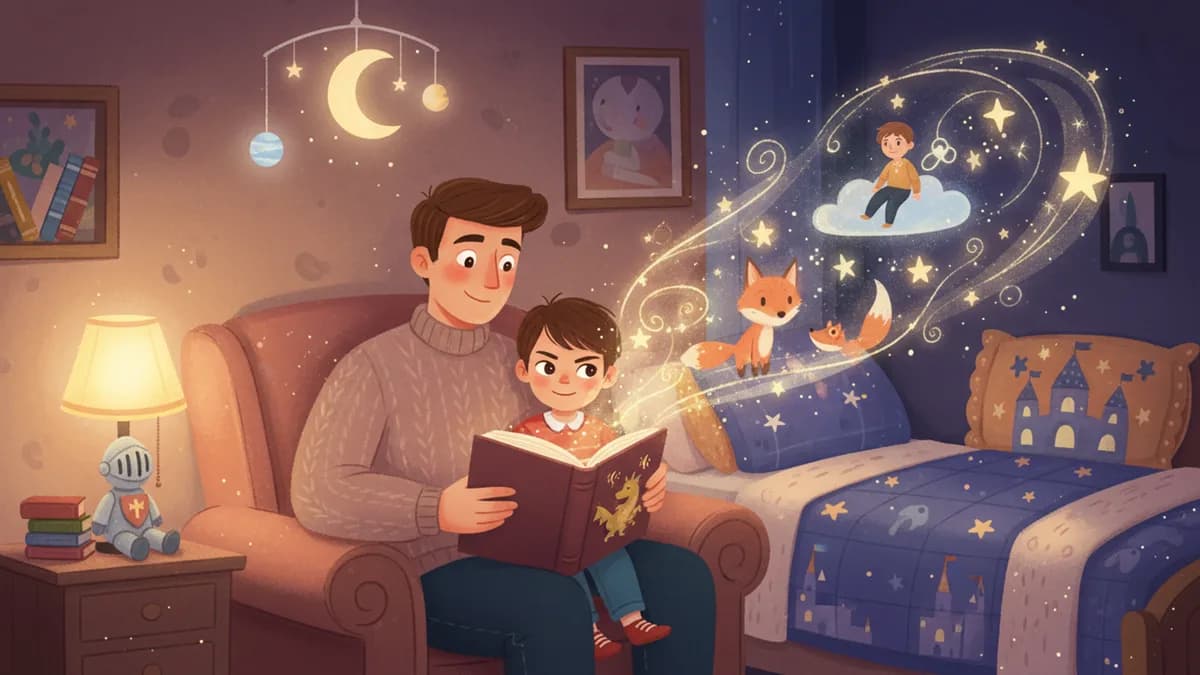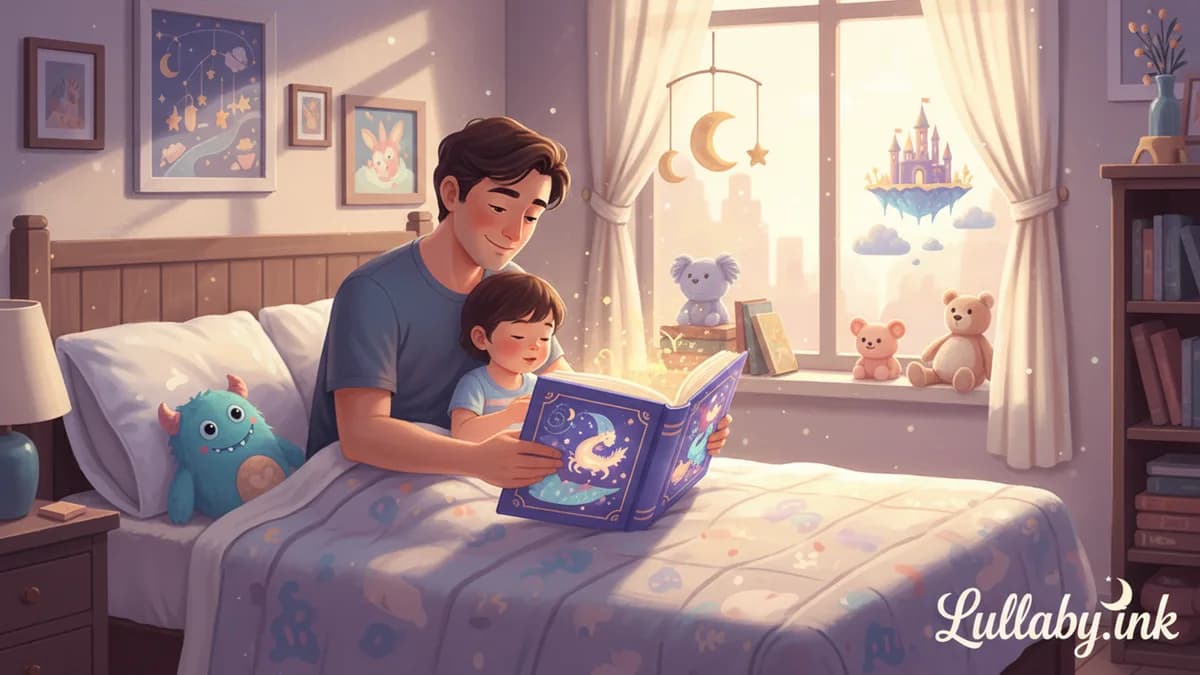
Every parent knows the magic of bedtime stories. That quiet moment when the world slows down, when little eyes grow heavy, and imaginations take flight. But what you might not realize is just how profound the science behind this simple ritual really is.
Decades of research now confirm what generations of parents sensed instinctively: reading to your child does far more than entertain. It literally shapes their developing brain, strengthens your bond, and sets the foundation for a lifetime of learning.
What Happens in Your Child's Brain During Story Time
When you read to your child, you're not just sharing words on a page. You're igniting a neurological fireworks show.
A landmark study from Cincinnati Children's Hospital used MRI scans to observe children's brains during story time. The results were striking. When children listened to stories, the areas responsible for visual imagery, language comprehension, and narrative understanding all lit up with activity. Children who were read to more frequently showed significantly stronger neural connections in these regions.
Children who are read to regularly show 30% more activity in the brain regions responsible for language comprehension and visual imagery.
Dr. John Hutton, the study's lead researcher, described it as "exercising" the brain's reading network, building the mental muscles children will need when they start reading independently.
Harvard's Center on the Developing Child has documented how these early experiences shape brain architecture. The back-and-forth interaction between parent and child during reading, what researchers call "serve and return," creates neural pathways that support learning, behavior, and health throughout life.
Five Research-Backed Benefits of Reading to Your Child
1. Language Development and Vocabulary Expansion
Children who are read to regularly hear more words, and more diverse words, than those who aren't. A study published in the Journal of Developmental and Behavioral Pediatrics found that children who heard about five books a day entered kindergarten having heard approximately 1.4 million more words than children who were never read to.
This vocabulary advantage translates directly to academic success. Early language exposure is one of the strongest predictors of reading achievement in school and beyond.
But it's not just about quantity. The language in picture books tends to be richer and more varied than everyday conversation. Books introduce children to words and sentence structures they might not encounter otherwise, expanding their linguistic toolkit.
2. Emotional Bonding and Secure Attachment
The physical closeness of story time, cuddled together in a cozy spot, creates a powerful emotional experience. This shared activity releases oxytocin, the "bonding hormone," in both parent and child.
Research from the Harvard Graduate School of Education shows that these positive reading experiences contribute to secure attachment, the foundation of healthy emotional development. Children who feel securely attached are more confident, better at managing stress, and more successful in relationships throughout their lives.
Story time also creates a predictable, reliable moment of connection in what can often be hectic days. Children thrive on this consistency, knowing that no matter what happened during the day, this special time together is coming.
3. Improved Sleep Quality Through Routine
Pediatric sleep specialists consistently recommend bedtime stories as part of a healthy sleep routine. The ritual signals to your child's body and mind that it's time to wind down.
The American Academy of Pediatrics emphasizes that consistent bedtime routines help children fall asleep faster, wake less during the night, and sleep longer overall. For a step-by-step guide tailored to every stage, see our post on bedtime routines that actually work, organized by age. A calming story is the perfect transition between the stimulation of the day and the rest of sleep.
Unlike screens, which emit blue light that suppresses melatonin, books actually support the body's natural sleep preparation. We explore this tradeoff in depth in our article on screen time vs. story time at bedtime. The gentle engagement of listening to a story activates the parasympathetic nervous system, helping children physically relax.
4. Empathy Development Through Character Identification
Stories are empathy machines. When children follow characters through challenges and emotions, they practice understanding perspectives different from their own.
Research from York University found that children who engage with stories show increased empathy and theory of mind, the ability to understand that others have thoughts and feelings different from our own. This social-emotional skill is crucial for success in school, friendships, and eventually the workplace.
When your child gasps as the character faces danger or cheers when they succeed, they're building the neural pathways that will help them understand and connect with real people in their lives.
5. Early Literacy and School Readiness
The connection between being read to and later reading success is perhaps the most thoroughly documented benefit. Children who are read to regularly:
- Develop phonemic awareness (understanding that words are made of sounds)
- Learn how books work (reading left to right, pages turning in order)
- Build comprehension skills (understanding story structure, cause and effect)
- Develop a love of reading that motivates independent reading later
The National Institute for Literacy found that early literacy skills are among the strongest predictors of later academic achievement, not just in reading, but across all subjects.
The Personalization Advantage
Here's where the science gets even more interesting. All of these benefits are amplified when children see themselves in the stories they hear.
Research on "self-referential encoding" shows that we process and remember information more deeply when it relates to ourselves. When a child hears a story where they are the main character, where they see their own face illustrated in the pages, the engagement reaches an entirely different level.
Studies show children pay closer attention, engage more deeply, and remember stories better when they can see themselves in the narrative.
A study published in Early Childhood Research Quarterly found that children showed significantly higher engagement and comprehension when story characters shared their characteristics. The children weren't just passive listeners; they were active participants in the narrative.
This is why personalized stories are more than a novelty. They're a scientifically-supported tool for maximizing the benefits of reading. Modern AI-powered story generators can transform your child's photo into illustrated characters, placing them at the center of adventures designed just for them.
When your child sees their own name, their own face transformed into a storybook character, they don't just hear about someone being brave or kind or curious. They experience being those things. The lessons of the story become personal truths rather than abstract concepts.
Making the Most of Story Time
Understanding the science helps, but putting it into practice is what matters. Here are research-supported strategies for maximizing the benefits of your bedtime reading:
Make it interactive. Ask questions, point to pictures, let your child turn the pages. This "dialogic reading" approach has been shown to accelerate language development more than passive listening.
Follow their lead. If your child wants to talk about the pictures or go back a few pages, go with it. Their curiosity is driving learning.
Be consistent. The routine matters as much as the reading itself. Try to read at the same time each night, in the same spot, creating a reliable ritual.
Choose books they love. Repetition isn't just okay; it's beneficial. Reading a favorite book for the hundredth time still builds skills and strengthens your bond.
Make it cozy. The physical closeness matters. Snuggle up, use silly voices, and make bedtime something your toddler actually looks forward to.
Beyond the Benefits: Creating Memories
Perhaps the most important truth about bedtime stories can't be measured in brain scans or academic studies. These moments become memories. The books that shape childhood become touchstones that last a lifetime.
Years from now, your child might not remember the specific words of the stories you read together. But they'll remember how they felt: loved, safe, important enough for you to slow down and share this time with them.
The science confirms what your heart already knows. Every bedtime story matters. Every page turned together is an investment in your child's future and a gift in the present moment.
Start Tonight
You don't need special training or expensive materials to give your child these benefits. You just need a book, a few minutes, and the willingness to be present.
Whether you're reading from a tablet, a library book, or a personalized story where your child stars in their own adventure, the power is in the ritual. In the closeness. In the magic of words shared between you.
The science is clear. The benefits are real. And the best time to start is now.
Tonight, turn off the screens a few minutes earlier. Find a cozy spot. Open a book. And give your child one of the most powerful gifts you can: the gift of story.