When you pick up a children's book, the illustrations hit you before the words do. The art style sets the mood, captures attention, and shapes how the entire story feels.
Think about it. A bedtime story drawn in bold comic book lines would feel completely different than the same words illustrated in soft watercolor washes. The art isn't just decoration. It's half the storytelling.
This is why choosing the right illustration style matters—especially for personalized stories where your child is the main character. The visual world they inhabit should match the adventure they're having.
Why Illustration Style Matters
Children process images differently than adults. Before they can read, they're "reading" pictures. Even after developing literacy, children continue to rely heavily on illustrations to understand emotion, follow action, and engage with stories.
Research on visual processing in children shows that art style affects:
- Emotional response: Soft styles calm; bold styles excite
- Attention span: The right visual match keeps them engaged longer
- Story comprehension: Style cues help children understand tone and genre
- Memory formation: Distinctive visuals make stories more memorable
The illustration style you choose shapes the entire reading experience. If you're exploring personalized books for the first time, our comparison of the best personalized children's books in 2026 covers how different platforms handle illustration quality.
Match the art style to the story's purpose. Calming watercolors for bedtime. Dynamic comics for adventure. Your child will intuitively understand the mood before you read a single word.
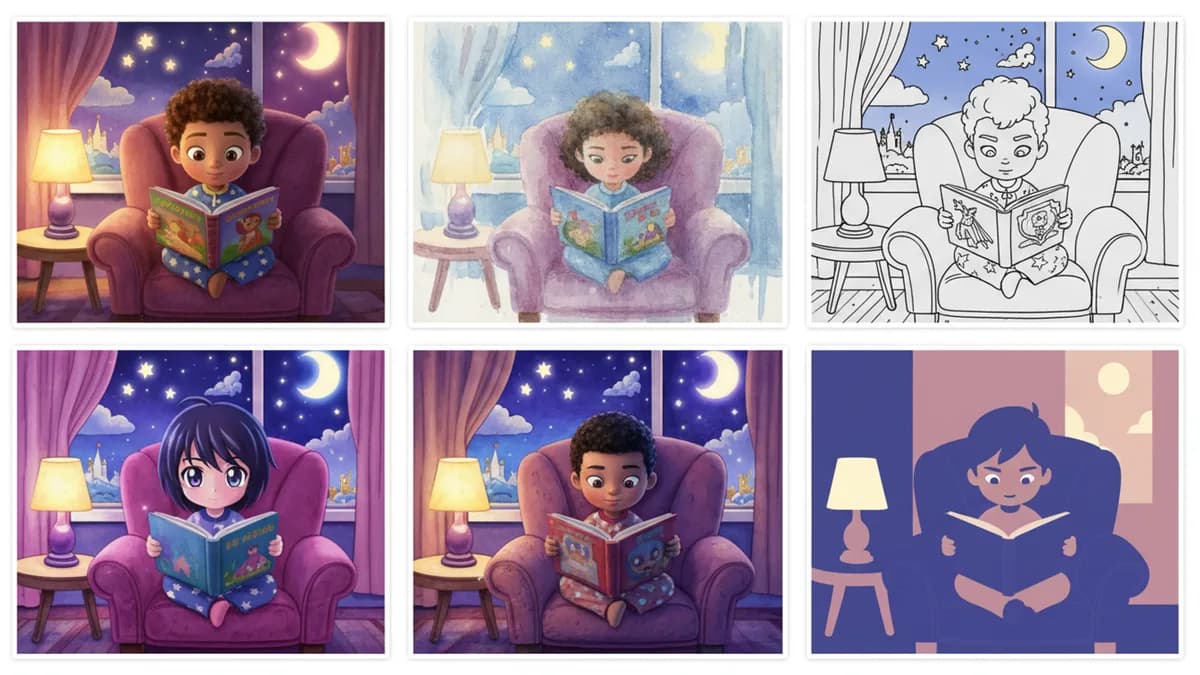
The Seven Styles of Children's Book Illustration
Modern personalized storybooks offer multiple illustration styles. Here's a deep dive into each, with guidance on when to choose them.
Stylized Realism
The look: Illustrated realism with high character likeness — the most faithful representation of your child's features in a storybook setting.
The feel: Warm, lifelike, and deeply personal. Your child is unmistakably themselves.
Best for:
- Any story where recognizing your child matters most
- First personalized books
- Gifts for grandparents
- Stories celebrating the child themselves
Story themes that shine: Everyday adventures, birthday celebrations, family moments, milestone stories.
This is Lullaby's newest and default style. It combines illustrated warmth with the highest character likeness of any style — your child's face, hair, and expression are preserved with remarkable accuracy while still feeling like a storybook illustration rather than a photograph.
Pixar Adventure
The look: Polished 3D animation with warm cinematic lighting, expressive faces, and lush, detailed backgrounds.
The feel: Warm, inviting, and emotionally resonant. Characters feel like friends you'd want to spend time with.
Best for:
- Stories with emotional depth and character development
- Adventures with heart (friendship, family, overcoming challenges)
- Children who love animated movies
- Any story where you want maximum expressiveness
Story themes that shine: Friendship journeys, family adventures, overcoming fears, learning kindness.
This style draws from the visual language of modern animated films. The characters have big, expressive eyes and subtle facial expressions that convey emotion without words. Backgrounds are rich and inviting, making every scene feel like somewhere you'd want to visit.
For stories about feelings—learning to share, dealing with a new sibling, making friends—Pixar Adventure style gives characters the emotional range to really land those moments.
Dreamy Watercolor
The look: Soft brush strokes, translucent layers, gentle palettes, and visible paint texture.
The feel: Calm, whimsical, and tender. Like a gentle hug in visual form.
Best for:
- Bedtime stories and wind-down routines
- Emotionally sensitive stories (loss, change, big feelings)
- Nature and animal themes
- Stories meant to soothe
Story themes that shine: Bedtime adventures, nature exploration, quiet friendship moments, processing emotions.
Watercolor illustration has a timeless storybook quality that parents often remember from their own childhoods. The soft edges and gentle color transitions create a dreamy atmosphere perfect for stories read in the calm before sleep.
The style's imperfect edges and visible brush strokes also feel handmade and warm—a nice contrast to the digital precision children encounter everywhere else.
Bold Comic
The look: High-contrast panels with dynamic inked lines, halftone textures, and action-focused framing.
The feel: Energetic, exciting, and fun. Every page feels like something is happening.
Best for:
- Action and adventure stories
- Superhero themes
- Stories with lots of movement and excitement
- Children who love graphic novels and comic books
Story themes that shine: Superhero adventures, mystery solving, treasure hunts, epic quests.
Comic book style brings kinetic energy to every page. The bold outlines and dramatic angles make action sequences pop. Even simple moments feel dynamic when rendered with comic book techniques.
For children who love superheroes or gravitate toward graphic novels, this style speaks their visual language. The story format they know from comics makes the personalized story feel like joining their favorite heroes.
Anime Fantasy
The look: Expressive characters with luminous eyes, cel-shaded lighting, and dramatic backdrops.
The feel: Epic, beautiful, and larger-than-life. Stories feel like grand adventures.
Best for:
- Fantasy and magical stories
- Epic journeys and quests
- Older children (6-10) who enjoy anime
- Stories with dramatic emotional beats
Story themes that shine: Magical worlds, epic quests, fantasy adventures, stories with wonder.
Anime-inspired illustration brings a distinctive aesthetic that resonates strongly with children familiar with the style. The expressive eyes and dramatic lighting create emotional intensity that makes moments feel important.
This style works particularly well for fantasy themes—magical creatures, enchanted lands, and adventures that feel larger than everyday life.
Claymation
The look: Tactile stop-motion charm with sculpted textures, soft fingerprint details, and handcrafted set pieces.
The feel: Whimsical, quirky, and delightfully handmade. Like a world built just for play.
Best for:
- Humorous and quirky stories
- Adventure tales with a playful tone
- Stories featuring fantastical creatures
- Children who love stop-motion films
Story themes that shine: Silly adventures, creature stories, exploration of imaginary worlds, anything with humor.
Claymation style evokes the beloved stop-motion films that have charmed audiences for generations. The tactile quality—the sense that everything is sculpted and real—creates a uniquely immersive experience.
Children often respond to the handcrafted feel. In a world of digital polish, the visible "making" of claymation-style illustrations feels special. Imperfections become charm.
Modern Minimalist
The look: Clean vector shapes, limited color palettes, geometric forms, and intentional negative space.
The feel: Contemporary, sophisticated, and design-forward. Stories feel fresh and modern.
Best for:
- Concept-focused stories (emotions, ideas, learning)
- Contemporary settings
- Design-conscious parents
- Stories where clarity matters more than detail
Story themes that shine: Learning concepts, emotional awareness, modern settings, stories about ideas.
Minimalist illustration strips away everything except what matters. This clarity can be powerful for stories focused on concepts or emotions—when you want the message to land without visual distraction.
The style also appeals to parents who appreciate contemporary design. A minimalist storybook looks at home in a modern nursery and photographs beautifully.
Matching Style to Story
Here's a quick guide for choosing the right style:
| Story Type | Best Styles | Why |
|---|---|---|
| Bedtime stories | Watercolor, Minimalist | Calming visuals support sleep transition |
| Action adventures | Comic, Pixar | Dynamic energy matches exciting plots |
| Fantasy and magic | Anime, Claymation | Epic or whimsical aesthetics enhance wonder |
| Emotional stories | Pixar, Watercolor | Expressive characters convey feelings |
| Humorous tales | Claymation, Comic | Playful styles match silly tones |
| Learning stories | Minimalist, Pixar | Clarity and engagement help messages land |
How AI Makes Style Consistency Possible
One of the challenges of illustrated children's books has always been consistency. A character needs to look the same from page to page, scene to scene. This requires tremendous artistic skill and time.
AI-powered illustration solves this challenge. If you're curious about how different AI tools compare in producing consistent illustrations, see our Lullaby vs. Google Gemini storybook comparison. When you create a personalized story with Lullaby, your child's photo is transformed into a stylized character that maintains their unique features—their hair, their eyes, their expression—across every illustration in the chosen style.
Whether your child is scaling a mountain in Pixar Adventure style or floating through clouds in Dreamy Watercolor, they'll recognize themselves on every page. The technology preserves what makes them them while adapting to whichever artistic world you choose.
Each style also adapts your child's clothing appropriately for each scene. A beach adventure shows them in swimwear. A royal ball puts them in finery. The AI handles these details automatically while keeping characters recognizable.
Let Your Child Choose
Here's a secret: children often have strong opinions about visual style, even if they can't articulate why.
Before creating a personalized story, show your child the style options. Watch what they're drawn to. Some children will immediately gravitate toward the energy of comic book style. Others will find the softness of watercolor irresistible. Pairing the right art style with a well-crafted prompt makes a huge difference -- learn more in our guide on how to write great story prompts for AI children's books.
Their preference tells you something about how they want to experience stories. Honor that instinct. The style that excites them visually will be the style that keeps them engaged page after page.
The Art of Your Child's Story
Illustration style isn't just an aesthetic choice. It's a storytelling choice. The visual world you create for your child's personalized adventure shapes how they experience every moment of the story.
Take time to match style to purpose. A bedtime story deserves calming watercolors. An adventure epic calls for dynamic comic art or cinematic Pixar style. A silly creature tale finds its home in whimsical claymation.
When the art matches the story, magic happens. Your child doesn't just read about adventures—they see themselves living them, in a visual world crafted to make every moment feel exactly right.
Ready to see how each style brings your child's story to life? Create an AI children's book with Lullaby and explore all seven illustration styles. Your child's face, your story idea, their perfect visual world—all in minutes.