Your child has surgery coming up. You've explained it as simply as you can, but their eyes are still wide with worry. The word "doctor" alone makes them tense up. You want to help, but how do you make a hospital feel safe for a four-year-old?
Helping a child cope with surgery is one of the hardest things a parent can face — especially when your child is too young to understand what's happening or why. Traditional explanations often fall flat with preschoolers. But there's an approach backed by child psychology research that works remarkably well: therapeutic storytelling.
Key Takeaway: Personalized stories that place your child as the hero of their own hospital adventure can significantly reduce surgery anxiety in children ages 3-6. By using metaphors from your child's own interests, these stories transform the unfamiliar into the familiar — giving children coping language and a sense of control before, during, and after a medical procedure.
One parent created exactly this kind of story for their daughter using Lullaby, a personalized children's story platform. The result — Jane and the Purple Butterfly Hospital — turned a terrifying experience into something her daughter could understand, process, and even feel proud of.
Meet Jane and Her Purple Butterfly Hospital
Jane is four years old. She loves purple. She loves butterflies. And she is terrified of doctors.
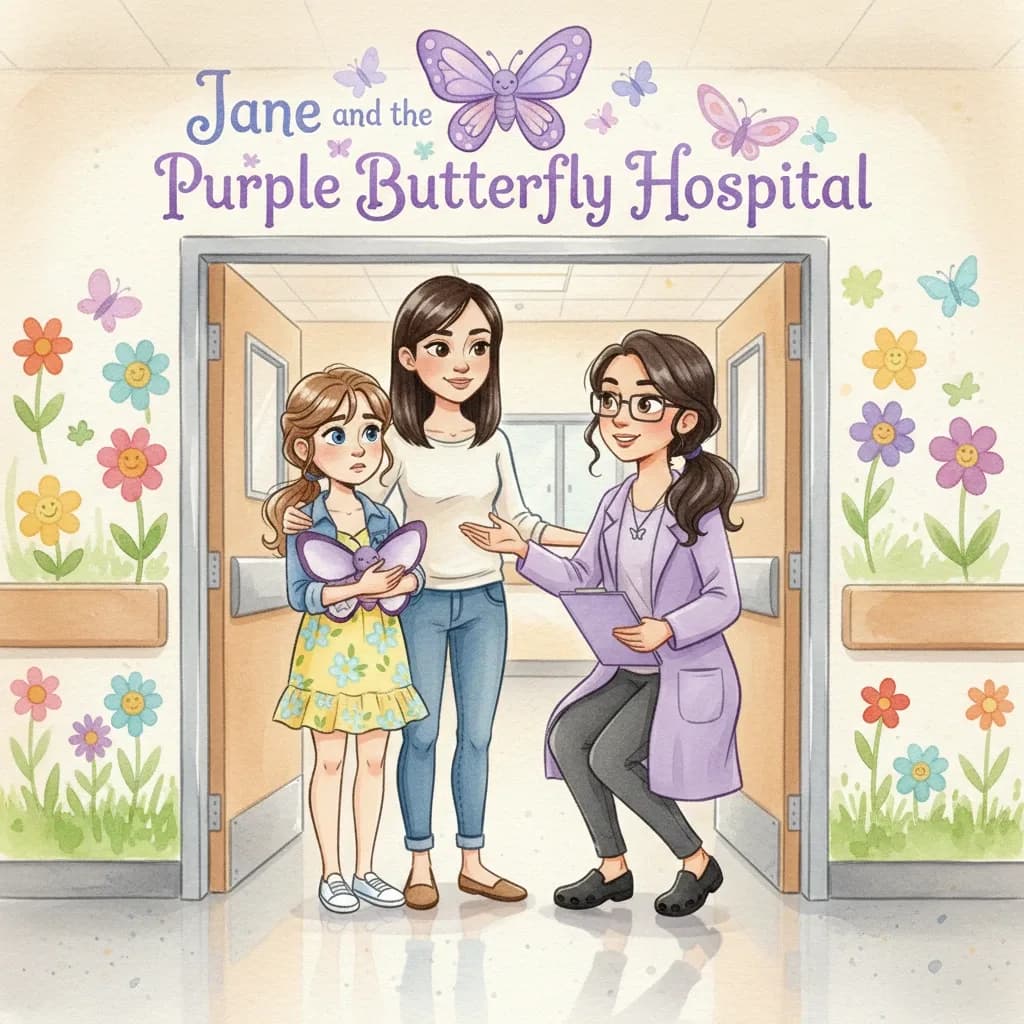
When her parents learned she needed surgery, they knew the hardest part wouldn't be the procedure itself — it would be the fear leading up to it. So they created a personalized story that turned the scariest place Jane could imagine into something magical: a butterfly garden, where doctors are "Butterfly Helpers" and medical tools glow purple.
How a Personalized Story Reframed the Hospital
In the story, Jane's mom gently reframes the hospital visit. "What if we pretend the hospital is a butterfly garden?" she suggests. It's a small shift, but it changes everything. Suddenly, the doctor isn't a stranger with needles — she's Dr. Lily, a kind Butterfly Helper who wears a purple coat and carries a tiny butterfly flashlight that doesn't hurt at all.
The story walks Jane through the entire experience: meeting the doctor, having her heart listened to, breathing in the "butterfly cloud" (anesthesia), waking up with her mom beside her, and going home with a butterfly sticker over her heart. By the end, Jane still doesn't love doctors — but she knows they can be kind, and that makes her a lot less afraid.
Why Metaphors Work Better Than Medical Explanations for Preschoolers
When we tell a preschooler "the doctor is going to help you," they hear the words but can't always process the abstract concept. Their brains work differently. At age three to six, children think in pictures, stories, and feelings — not in logic and reason.
That's why metaphor is so powerful when preparing a child for surgery. By connecting the hospital to something Jane already loves — butterflies — her parents gave her an emotional bridge between the familiar and the frightening. The butterfly garden isn't a lie. It's a lens. And through that lens, Jane could see the hospital as a place where caterpillars grow strong wings, not a place where bad things happen.
The story doesn't pretend surgery isn't scary. Jane still feels her tummy go "twisty." She still whispers "I don't like doctors." But she's given tools to move through the fear rather than be trapped by it.
Matching Metaphors to Your Child's World
The most effective metaphors come from your child's own world. If your child loves dinosaurs, the hospital becomes a dinosaur rescue center. If they love space, the doctor is an astronaut engineer. If they love animals, the operating room is a veterinarian's office where they're the special patient. Match the metaphor to what makes your child feel powerful.
This is where personalized stories have a significant advantage over generic children's books about hospitals. While books like Curious George Goes to the Hospital introduce the concept in general terms, a personalized story uses your child's name, their favorite color, and the specific things they love to create a narrative that feels like it was written just for them. Psychologists call this self-efficacy — the child's belief that they specifically can handle the experience.
The Emotional Arc That Helps Children Process Surgery Fear
What makes this story therapeutic — not just entertaining — is its emotional honesty. Jane's fear is never dismissed. No one says "don't be silly" or "there's nothing to worry about." Instead, her feelings are met with warmth and creative problem-solving. This approach aligns with what child development research tells us about how stories help children overcome fears: they provide a safe emotional distance while modeling real coping strategies.
Six Stages of Therapeutic Storytelling
The story follows a carefully paced arc that mirrors how children actually process anxiety:
-
Acknowledgment — Jane is scared, and that's okay. Her mom sits with her on the rug and listens. The fear is validated, not dismissed.
-
Reframing — Mom offers the butterfly garden metaphor. She doesn't force it. She invites it. Jane peeks out from her stuffed butterfly, curious.
-
Small trust — Dr. Lily shows Jane the purple flashlight on her own hand first. Jane watches. She's cautious but starting to feel safe.
-
Gentle laughter — When the flashlight makes Jane's stuffed butterfly sparkle, she giggles. The tension breaks, just a little. The scary place has produced something delightful.
-
Letting go — The anesthesia mask becomes a "butterfly cloud" that smells like bubblegum. Jane breathes in, thinking of purple flowers and fluttery wings.
-
Earned pride — Jane wakes up and realizes she did it. Not because someone told her to be brave, but because she was brave in her own way, on her own terms. "I was scared," she whispers to the dark that night, "but I did it."
This progression matters. It shows children that courage isn't the absence of fear — it's feeling fluttery and flying anyway, as Dr. Lily puts it.
What the Research Says About Storytelling and Medical Anxiety in Children
The idea of using stories to prepare children for medical procedures isn't just intuitive — it's supported by research. A systematic review published in the Journal of Pediatric Nursing found that narrative-based interventions significantly reduced preoperative anxiety in young children compared to standard preparation methods.
The mechanism behind this is called narrative rehearsal — by mentally walking through an experience in a safe context (a story read at home with a parent), children build familiarity with what would otherwise be completely unknown. Their brains process the story events as a kind of "practice run," which reduces the shock and fear of the real experience.
Child psychologist and bibliotherapy researcher Dr. Perri Klass notes that stories give children "a way to rehearse difficult situations and emotions before they encounter them in life." For preschoolers especially, who cannot yet reason through abstract explanations, stories offer a concrete, emotionally safe way to understand what's coming.
| Age Range | How Surgery Fear Presents | Best Story Strategy |
|---|---|---|
| 2-3 years | Cries, clings, cannot be reasoned with | Simple metaphor, lots of pictures, comfort object focus |
| 3-5 years | Asks "will it hurt?", may refuse to go, has nightmares | Reframing metaphor, step-by-step preview, named helper characters |
| 5-7 years | Worries days before, asks detailed medical questions | Honest narrative with coping tools, earned pride arc, post-procedure scene |
How Watercolor Illustrations Calm Children Before Medical Procedures
Jane and the Purple Butterfly Hospital is illustrated in a dreamy watercolor style — soft brush strokes, translucent layers, and gentle palettes. This isn't a coincidence. Watercolor's inherent softness makes the hospital scenes feel warm rather than clinical. The purple tones throughout create visual consistency that reinforces Jane's sense of safety.
For young children, illustrations often carry more emotional weight than words. The gentle, flowing quality of watercolor art sends a signal to a child's nervous system: this is a safe space. This is a calm story. You can relax here. If you're curious about how different illustration styles affect storytelling, our guide to children's book illustration styles explores this in depth.
Create a surgery preparation story for your child
Turn your child into the hero of a personalized hospital adventure — using their name, favorite things, and a gentle metaphor that makes the experience feel safe.Who This Surgery Preparation Story Helps
This story — and the approach behind it — is perfect for:
- Children ages 3-6 preparing for any medical procedure — surgery, stitches, dental work, MRI scans, or even routine checkups
- Bedtime reading in the 2-3 days leading up to a procedure, to build familiarity through repetition
- Waiting room comfort — bring the story to the hospital as a grounding anchor your child already knows
- Post-procedure processing — reading together afterward helps children integrate the experience and feel proud of what they accomplished
- Any child with doctor anxiety, even without an upcoming procedure, to build positive associations over time
If your child also struggles with bedtime fears like fear of the dark, the same storytelling approach — reframing the scary into the familiar — works beautifully across different anxiety triggers.
How to Use a Story to Prepare Your Child for Surgery
Here's a practical guide for parents based on what worked for Jane's family:
-
Create or choose the story 3-5 days before the procedure. This gives enough time for repetition without creating weeks of anticipatory worry. If you're creating a personalized version, include your child's name, favorite color, a beloved toy, and a metaphor based on their interests.
-
Read together at bedtime — the same story, every night. Repetition is key. Each reading makes the hospital narrative more familiar, more predictable, and less frightening. By the third night, your child will start to relax into the story.
-
Let your child lead the conversation. If they ask questions during the story, answer honestly but simply. If they're silent, that's fine too. Don't interrogate — just be present.
-
Bring the story to the hospital. On the day of the procedure, bring the physical book or have it on a device. Familiar stories are powerful grounding objects, just like a stuffed animal or blanket.
-
Use the story's language with medical staff. Tell the nurses and doctors what metaphor you've been using. Many pediatric teams will happily play along — saying "let's check your wings" instead of "let me listen to your heart" can make all the difference.
-
Read again after the procedure. Once you're home, read the story together one more time. This helps your child see the full arc: they were scared, they went through it, and now they're safe at home — just like the character in the story.
-
Celebrate earned pride, not forced bravery. Say "you did it" rather than "you were so brave." The difference is subtle but important: the first honors what they accomplished, the second can feel like pressure for next time.
How Personalized Stories Differ from Generic Hospital Books
Generic hospital preparation books are helpful starting points. Curious George Goes to the Hospital and Franklin Goes to the Hospital introduce children to the concept of a hospital visit. But they have a fundamental limitation: the character in the book isn't your child.
Personalized stories close that gap. When Jane sees that Dr. Lily wears a purple coat and carries purple tools, it's not a coincidence in the story — it's a signal that this world was built for her. That sense of belonging transforms the reading experience from "this is a story about some kid" to "this is my story."
| Feature | Generic Hospital Books | Personalized Stories |
|---|---|---|
| Character name | Fixed (Curious George, Franklin) | Your child's name |
| Fears addressed | General hospital anxiety | Your child's specific fear |
| Interests incorporated | None | Favorite color, animals, hobbies |
| Metaphor type | Universal | Tailored to what your child loves |
| Self-efficacy impact | Moderate (identification by similarity) | High (direct self-representation) |
Research on bibliotherapy suggests that self-referential stories — where the child recognizes themselves in the narrative — produce stronger coping outcomes than third-person stories alone. This is especially true for preschoolers, whose developing sense of identity makes "that's me!" a powerful emotional experience.
Create a Surgery Preparation Story for Your Child
You can create a personalized surgery preparation story for your child at Lullaby. Tell us about your child — their name, age, what they love, and what they're facing — and we'll craft a story that meets them exactly where they are. The story will use their favorite things as the metaphor, walk them through the medical experience step by step, and end with them safe at home, proud of what they accomplished.
Sources:
- Kain, Z.N., et al. (2007). "Preoperative anxiety in children: predictors and outcomes." Anesthesia & Analgesia. Link
- Tunney, A.M. & Boore, J. (2013). "The effectiveness of a storybook in lessening anxiety in children undergoing tonsillectomy and adenoidectomy." Journal of Pediatric Nursing. Link
- Klass, P. (2018). "Why What You Read Matters." The New York Times. Link