The lights click off. Shadows stretch across the walls. And somewhere in the house, a little voice calls out: "I don't want to sleep alone."
If this bedtime scene sounds familiar, you're not alone. Nyctophobia—the clinical term for fear of the dark—affects an estimated 90% of children at some point during early childhood. It's one of the most common childhood fears, and one that can make bedtime stressful for the whole family.
But what if we could help our little ones see nighttime differently? Not as something scary, but as something magical?
What Is "Jamie and the Brave Night Light"?
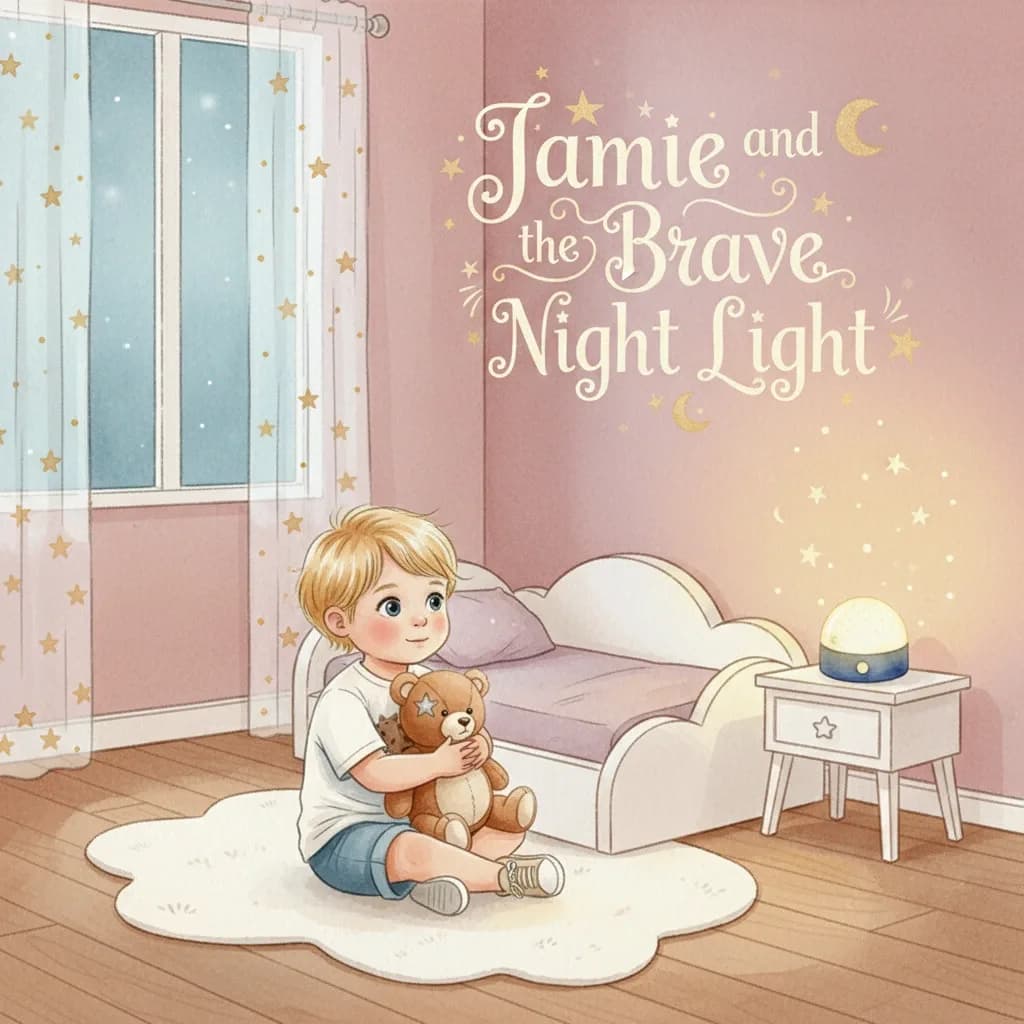
Jamie and the Brave Night Light is a personalized children's bedtime story created by Lullaby, an AI-powered storytelling platform. The story helps children ages 2-5 overcome fear of the dark by teaching them to reframe shadows as friendly shapes.
In the story, Jamie—afraid to sleep alone—discovers that the scary shadows in their room are actually a wiggly dragon made from the table leg and a tall guardian bear watching over them. With the help of a glowing night light and a beloved stuffed animal, Jamie learns that nighttime is full of magic, not monsters.
Parents can create custom versions featuring their own child as the hero at lullaby.ink.
Why Children Are Afraid of the Dark (And Why That's Normal)
Before we can help children overcome their fear, it helps to understand where it comes from. Fear of the dark isn't a flaw or a problem—it's a normal part of development.
The Science Behind Nighttime Fears
Between ages 2-4, children's imaginations develop rapidly. They can now imagine what might be lurking in the dark. But their logical reasoning—the ability to tell themselves "monsters aren't real"—hasn't caught up yet.
This creates a perfect storm: a vivid imagination plus limited reality-testing equals scary shadows.
| Age Range | What Happens | How Stories Help |
|---|---|---|
| 0-2 years | Rarely afraid; limited imagination | Simple, rhythmic books |
| 2-4 years | Peak fear development; imagination outpaces logic | Stories that reframe fears |
| 4-6 years | Fears often persist; responds to reasoning | Stories with problem-solving heroes |
| 6-8 years | Begins distinguishing fantasy from reality | Adventure stories with brave characters |
| 8+ years | Fears typically diminish naturally | Chapter books exploring emotions |
Signs Your Child Has Bedtime Anxiety
How do you know if your child's bedtime struggles are fear-related? Look for these signs:
- Stalling tactics at bedtime (asking for water, extra hugs, one more story)
- Insisting on sleeping with lights on or doors open
- Asking to sleep in your bed
- Physical symptoms: tummy aches, racing heart, trouble breathing
- Nightmares or night terrors
- Fear of specific things: closets, under the bed, shadows
If you recognize these patterns, know that you're dealing with something very common—and very addressable.
How This Story Helps Kids Who Are Scared of the Dark
Jamie and the Brave Night Light doesn't dismiss or minimize a child's fear. Instead, it meets them exactly where they are—and then gently guides them somewhere new.
Meeting Children Where They Are
The story opens with Jamie in a moment many children know intimately:
"It was bedtime in Jamie's cozy room. The lights clicked off with a tiny click, and shadows stretched across the walls. Jamie hugged their favorite stuffed bear very tight. 'I don't like the dark,' Jamie whispered. 'I don't want to sleep alone.' Their tummy felt wiggly and their heart thumped-thumped."
This validation matters. Children need to know their feelings are real and okay before they can move past them. The story never says "don't be scared" or "there's nothing to fear." It acknowledges the fear as real.
Cognitive Reframing: Turning Scary Shadows Into Friendly Shapes
The most powerful technique in this story is what child psychologists call cognitive reframing. Instead of making the shadows disappear, Jamie learns to see them differently:
"The long shadow on the floor turned into a wiggly dragon shape. Its tail was really just the leg of the table, and its head was the corner of the rug. It looked more silly than scary now."
The shadows are still there. The dark is still there. But now they're "full of stories."
According to child development research, cognitive reframing is one of the most effective approaches for managing childhood fears. By giving children agency over their interpretation of the environment, stories like this build lasting coping skills.
Try this at home: When your child points out a scary shadow, play along. "That shadow looks like it could be a sleepy puppy! What do you think it's dreaming about?" Turning shadows into characters gives children power over their environment.
Why Night Lights and Comfort Objects Work
Two elements in this story reflect real child psychology principles: the night light and the stuffed bear guardian.
The Role of Night Lights in Bedtime Security
Night lights don't just provide visibility—they provide control. When a child can see their room, they can verify that the shadows are just furniture. The soft glow also creates a warm, comforting atmosphere that signals safety.
In the story, Jamie's night light becomes almost magical:
"On the ceiling, tiny spots of light from the night light danced like stars. The room felt like a small, safe sky."
Pro tip: Choose warm-colored night lights (amber or red) over blue or white, which can interfere with melatonin production and make it harder to fall asleep.
Stuffed Animals as Nighttime Guardians
There's a reason Jamie's bear becomes the "nighttime guardian." Stuffed animals and comfort objects serve a crucial developmental role called a transitional object. They represent the safety and love of parents while helping children develop independence.
When Jamie assigns the bear the job of "watching the dark," something important happens:
"'You can be my nighttime guardian,' Jamie told the bear. 'You can watch the dark for me.' Jamie set the bear carefully on the pillow beside them. The bear's shadow stretched over the bed like a soft, fuzzy shield."
The child is no longer alone—they have a protector. And by giving the bear this role, Jamie takes control of the situation. They're not waiting for someone else to make them feel safe; they're creating their own safety.
The Dreamy Watercolor Illustration Style
The illustrations in Jamie and the Brave Night Light use a dreamy watercolor style with soft brush strokes, translucent layers, and gentle color palettes.
This artistic choice is intentional. Harsh, bold illustrations can feel jarring at bedtime. But watercolors have a quality of softness that mirrors the drowsy, half-asleep feeling of a child's room at night. The gentle blending of colors reflects how shadows actually look—not sharp and defined, but blurred and flowing.
This style also makes the "friendly" shadows feel genuinely friendly. The dragon isn't a fierce, detailed creature but a soft, wiggly shape that children can easily imagine in their own rooms.
Who Is This Story Perfect For?
Best Ages for Fear of the Dark Stories
Jamie and the Brave Night Light is ideal for children ages 2-5. The simple, repetitive language patterns and relatable situation make it accessible even for younger toddlers, while the emotional depth keeps older preschoolers engaged.
This story works especially well for:
- Children experiencing their first fear of the dark (usually around age 2-3)
- Kids who resist bedtime due to anxiety about being alone
- Families transitioning children to their own room
- Siblings of new babies who may feel displaced at bedtime
- Children going through any major change (new home, starting preschool)
When and How to Read It
For maximum impact, read Jamie and the Brave Night Light in your child's actual bedroom with a night light on. Children can look around and find their own friendly shadow shapes while you read, making the lessons immediately tangible.
5 tips for reading fear-addressing stories at bedtime:
-
Read it before fears peak. Don't wait until your child is crying—read it during calm moments so they can absorb the lessons.
-
Pause and point. "Look, there's a shadow on your wall too! What shape does it look like?"
-
Let them hold a stuffed animal. Mirror Jamie's experience by giving them their own "guardian."
-
Revisit the story. Repetition builds familiarity and reinforces the coping strategies.
-
Reference it later. When fears arise, remind them: "Remember how Jamie found the friendly dragon?"
How Personalized Fear Stories Differ from Traditional Books
Unlike traditional picture books about fear of the dark, personalized stories place your specific child as the protagonist.
Research suggests this creates stronger self-efficacy beliefs. When children see themselves being brave—not just a character named Jamie, but a character with their name, their face, their stuffed animal—they internalize the lesson more deeply.
The identification factor is powerful. It's not just a character who learned that shadows are friendly. They learned it. They were brave. They conquered the dark.
Create a Personalized Bedtime Story for Your Anxious Child
At Lullaby, you can create a custom bedtime story starring your child. Here's how it works:
- Upload a photo of your child
- Describe the situation—like "scared of the dark" or "doesn't want to sleep alone"
- Choose an illustration style (like the dreamy watercolor used in Jamie's story)
- Receive a personalized story where your child becomes the hero
The story transforms your child's photo into beautiful illustrations and weaves their name throughout the narrative. The result? A one-of-a-kind book that speaks directly to your child's experience.
Sometimes the most powerful medicine for fear is seeing yourself be brave.
Sweet dreams aren't just something that happen to children. They're something we can help create—one story at a time.