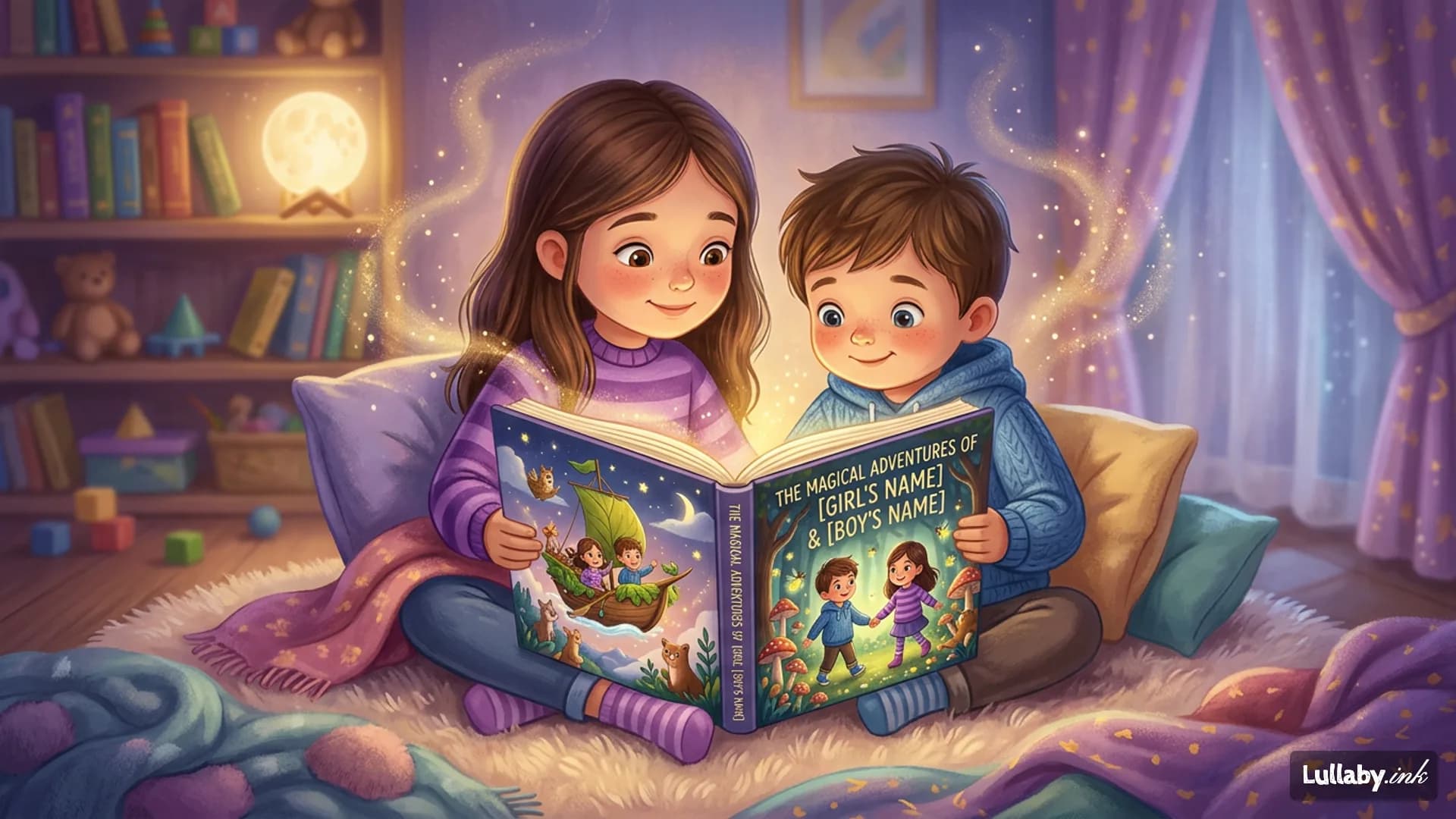
A multi-character AI picture book is a personalized children's storybook where two or three characters — typically siblings, a parent and child, or a child and pet — appear together throughout every illustrated page, each generated from their own uploaded photo.
When we talk to parents who use Lullaby, the number one request is always the same: "Can I put both my kids in the story?" Not just one child as the hero while the other watches from the sidelines. Both of them. Together. On every page.
It makes sense. Families are not solo acts. Bedtime stories feel incomplete when one child sees themselves in the illustrations and the other does not. Gifting a personalized book to one sibling while the other gets a generic one creates exactly the kind of imbalance parents try to avoid.
The problem is that most AI children's book generators were built for a single character. Adding a second or third character to a story is not just a matter of duplicating the process — it introduces real technical challenges around consistency, interaction, and visual clarity.
This guide walks you through how to create a multi-character AI picture book for kids that actually works, with consistent characters on every page and a story that treats everyone as a co-star.
What Makes Multi-Character AI Picture Books Different
Creating an AI picture book with one character is relatively straightforward. The AI learns what one child looks like, generates that character in different scenes, and keeps the appearance consistent from page to page.
Adding a second or third character multiplies the difficulty. The AI now has to:
- Maintain consistency for each character independently. If your daughter has brown curly hair and your son has straight blond hair, those features need to stay accurate across every single illustration. One slip and the whole book feels off.
- Handle character interactions. Characters in multi-character stories do not just stand side by side. They hold hands, share objects, look at each other, react to the same events. The AI needs to compose scenes where multiple characters interact naturally.
- Keep characters visually distinguishable. In group scenes, readers need to instantly tell which character is which. This requires clear differences in appearance, clothing, and positioning.
- Adapt outfits for each character separately. If the story moves from a living room to outer space, each character needs a costume change that makes sense for them individually. A 3-year-old and a 7-year-old should not be wearing identical spacesuits.
This is why most platforms cap their stories at one character. It is genuinely harder to do well. At Lullaby, we support up to 4 characters in a single story because we believe family stories should include the whole family.
Step-by-Step: Creating Your Multi-Character Picture Book
Here is a practical walkthrough for creating a multi-character AI picture book on Lullaby, from choosing your characters to reviewing the finished story.
Step 1: Choose Your Characters
Before you start, decide who the 2 to 4 characters in your story will be. The most popular combinations we see are:
- Two siblings -- the classic pairing, especially for bedtime stories
- Parent and child -- great for stories about shared experiences or traditions
- Child and pet -- pets can occupy one of the character slots
- Child and grandparent -- perfect for long-distance family connections
- Three siblings or cousins -- ideal for holiday gifts
Each character gets their own slot in the story, with their own name, age, and appearance.
Step 2: Upload a Photo for Each Character
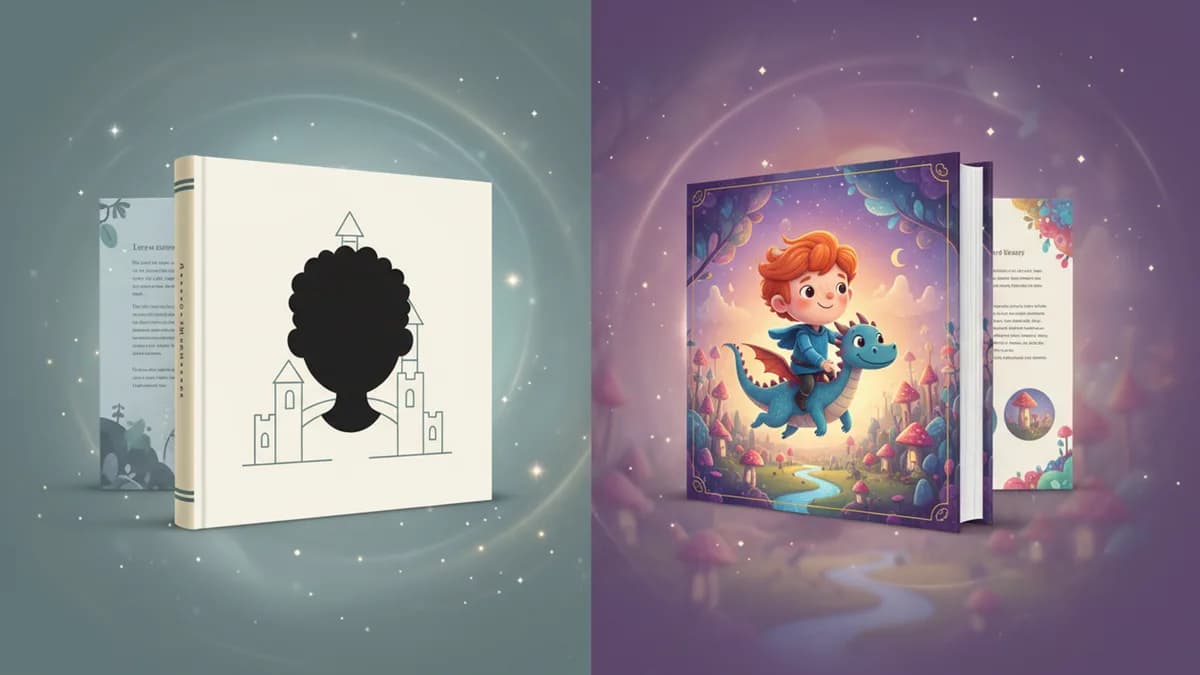
For each character, upload one clear photo. The AI transforms each photo into an illustrated cartoon version that will appear throughout the book. A few tips for best results:
- Use a front-facing photo with the face clearly visible. Avoid sunglasses, masks, or heavy shadows.
- One person per photo. Even if you are creating a story with siblings, upload each child's photo separately.
- Natural lighting works best. Indoor photos with good lighting or outdoor photos on an overcast day tend to produce the most accurate transformations.
- Pets work too. If one of your characters is a pet, upload a clear photo the same way you would for a person.
Step 3: Write a Prompt That Works for Multiple Characters
Writing a prompt for a multi-character story is slightly different from writing one for a solo adventure. The key is giving the AI enough direction to involve everyone meaningfully.
Include each character by name. Instead of "the kids go on an adventure," write "Mia (age 5) and Jake (age 7) go on an adventure." This helps the AI give each character a distinct role.
Assign roles or dynamics. Think about how the characters relate to each other in the story. Is one the leader and the other the cautious planner? Does the younger sibling surprise everyone with a clever idea? These dynamics make the story feel real.
Keep the plot focused. With multiple characters, it is tempting to create an elaborate story. Resist that urge. One clear adventure with one challenge to overcome gives each character room to shine without the story feeling rushed.
Here is an example of a strong multi-character prompt:
"Mia (5) and Jake (7) discover a treasure map in their grandmother's attic. Jake wants to follow the map immediately, but Mia insists on packing supplies first. Together they navigate the backyard, solve three clues, and find a surprise that Grandma left for both of them."
Step 4: Pick an Art Style That Works for Groups
Not every art style handles multiple characters equally well. When choosing a style for your multi-character story, consider:
- Stylized Realism works well because it preserves enough detail for each character to look distinct while keeping the illustrations warm and approachable.
- Classic Storybook is another strong choice for groups, with bold outlines that help each character stand out in shared scenes.
- Whimsical styles with softer edges can sometimes blur the distinction between characters in complex scenes. They work best when your characters have very different features (different hair colors, significant age gaps).
Preview the style on your characters before committing. Lullaby shows you the transformed cartoon versions of each character before you generate the full story, so you can confirm that everyone looks right.
Step 5: Review and Edit
Once the story generates, read through it carefully. Pay attention to:
- Does each character get meaningful moments? If one character dominates every page while the other is just present, consider adjusting your prompt and regenerating.
- Are the characters visually consistent? Check that hair color, clothing, and features stay the same from the first page to the last.
- Do the interactions feel natural? Characters in the same scene should be reacting to each other, not just occupying the same space.
Lullaby provides a 5-page preview so you can evaluate the story before committing. If something is off, tweak your prompt and try again.
5 Multi-Character Story Ideas Parents Love
If you need inspiration, these are the multi-character prompt ideas that consistently produce great results. You can also browse our story idea templates for ready-to-use prompts across themes like birthdays, bedtime, and adventures.
1. Siblings on a Space Adventure
"Layla (6) and Omar (4) build a spaceship out of cardboard boxes in the living room. When they climb inside, it actually takes off. They visit three planets, collect a glowing star from each one, and race home before bedtime."
Why it works: Space adventures give each child a role (pilot and navigator, or scientist and explorer) and the fantastical setting allows for vivid, varied illustrations.
2. Family Camping Trip
"Dad, Ella (5), and Sam (3) go camping in the mountains. Ella is in charge of setting up the tent, Sam collects sticks for the fire, and Dad pretends not to know how to do anything so the kids can teach him."
Why it works: Parent-child stories with a humorous dynamic are instantly engaging, and the camping setting provides multiple distinct scenes (hiking, campfire, stargazing, morning breakfast).
3. Child and Grandparent Baking Together
"Nana and Sophie (6) spend a rainy Saturday baking a surprise birthday cake for Mom. They make a huge mess in the kitchen, accidentally use salt instead of sugar on the first try, and finally create the most beautiful cake anyone has ever seen."
Why it works: Intergenerational stories have built-in warmth, and the baking process provides a natural story arc with a challenge, a setback, and a triumph.
4. Two Friends Solving a Mystery
"Ben (7) and Aiden (7) notice that someone has been leaving mysterious notes in their school library. They follow the clues after school, interview three suspects, and discover that the notes are actually a scavenger hunt created by their favorite teacher."
Why it works: Mystery stories naturally create roles for each character (one notices details, the other connects them) and keep the pacing tight.
5. Birthday Party Adventure with Cousins
"It is Maya's (5) birthday, and her cousins Liam (6) and Zoe (4) arrive with a gift that turns out to be a magical key. The three of them follow the key to a secret garden behind the house where animals can talk and the birthday cake grows on trees."
Why it works: Three-character stories work best when the plot gives each child a reason to be there. A birthday creates a natural reason for the group, and a shared magical discovery gives everyone equal stake in the adventure.
What to Look for in an AI Children's Book Generator for Multiple Kids
If you are evaluating AI children's book generator platforms for multi-character stories, our AI children's book generator comparison covers the key differences. Here are the features that matter most for multi-character stories:
Character Limit Per Story
This is the first filter. Many platforms support only one character. If you need two or three characters in the same story, your options narrow significantly. Lullaby supports up to 4 characters per story. Check this before investing time in any platform.
Photo-Based vs. Generic Characters
Some generators let you pick from preset character templates (hair color, skin tone, eye color). Others, like Lullaby, transform an actual photo of your child into a cartoon character. Photo-based characters are significantly more personal and recognizable, which matters even more in multi-character stories where each child needs to feel individually represented.
Story-Aware Outfit Changes
A good multi-character picture book adapts each character's clothing to match the story. If the characters go swimming, they should be in swimsuits. If they explore a castle, they might wear knight costumes. Look for platforms that handle outfit changes per character rather than keeping everyone in the same default clothes throughout.
Print Options for Family Keepsakes
Multi-character stories make especially meaningful physical gifts because they include the whole family. Check whether the platform offers printed books and what formats are available. Hardcover and layflat options tend to hold up best for books that will be read repeatedly by multiple children.
Start Your Multi-Character Story
Creating a personalized AI storybook with multiple characters does not have to be complicated. With the right platform and a thoughtful prompt, you can produce a story where every child in your family sees themselves as the hero.
If you are ready to try it, head to Lullaby's AI children's book generator and create a story with up to 4 characters. Upload a photo for each one, write a prompt that gives everyone a role, and preview the result before you commit. The whole process takes less than 10 minutes. See how Lullaby compares to other options in our AI children's book generator guide.
Related Reading
- Best AI Children's Book Generators in 2026 — 8 tools tested and compared
- Create Your AI Children's Book — Try Lullaby with a free 5-page preview