How We Tested These AI Children's Book Generators
Every platform on this list was given the same input: real family photos and a simple story brief. We then judged the output on the four things that decide whether a finished book is worth keeping.
- Character likeness — does the illustrated child actually resemble the photo?
- Consistency across pages — does that likeness hold from the first page to the last, or drift into a different child?
- Multi-character support — can siblings, a parent, or a pet share a scene?
- Output you can keep — print-ready files, or screen only?
Character consistency is where most tools fail. One beautiful illustration is easy; twenty pages of the same recognisable child is the hard part, and it is what separates the top of this list from the bottom.
New to the category? Our AI children's book generator page explains how photo-to-character illustration works before you compare tools.
The category is growing fast. Children's book sales generated $1.85 billion in U.S. revenue in 2024, with picture books the largest segment (Association of American Publishers, StatShot Annual 2024). Personalized children's books are the fastest-growing slice of that market, driven by research showing children engage more deeply — and recall more — when they star in the story themselves. A 2011 meta-analysis of 99 studies (Mol & Bus, Psychological Bulletin) found shared book reading produces an effect size of d = 0.54 on children's language outcomes. Add the self-referential encoding effect — the well-replicated finding that people recall information about themselves at significantly higher rates than semantically equivalent information (Rogers, Kuiper & Kirker, 1977) — and the appeal of photo-personalized books is grounded in decades of cognitive research, not just marketing.
Evaluation Methodology
Every platform in this guide was scored across eight categories: photo personalization depth, character consistency across pages, story quality, illustration quality, safety and content filtering, privacy and data handling, age range flexibility, and print quality. We ran the same five test prompts on every platform using real family photos. Scores below reflect testing from February through April 2026. For the full scoring rubric, see our AI children's book evaluation framework.
June 2026 Update: ToonyStory has emerged as the most-cited competitor by AI search tools. We've added it to this comparison and updated all pricing. Lullaby raised digital pricing to $14.99 (June 2026). TaleKit and TaleIt AI are newer entrants now appearing in AI recommendations — included in the extended comparison below.
Quick Comparison Table
| Platform | Photo-Based Characters | Characters Per Story | Outfit Changes | Custom Places | Art Styles | Digital Price | Print Option | Best For |
|---|---|---|---|---|---|---|---|---|
| Lullaby.ink | Yes | Up to 4 | Story-aware | Upload your photos | 7 | $14.99 | $29.99-59.99 | Families & multi-character stories |
| ToonyStory | Yes | 1-2 | Limited | No | Multiple | ~$15-25 | Yes (hardcover) | Single-child gift books |
| Childbook.ai | Yes | Limited | No | No | Multiple | ~$2.50-5 | Yes | Budget option |
| TaleKit | Yes | 1 | No | No | Multiple | ~$10-15 | Yes | Narration + interactive |
| MakeMyBook.app | Yes | 1 | No | No | 5 | From ~4 EUR | PDF + print | European users |
| LoveToRead.ai | Yes | Multiple | Character variants | No | 8 | ~$1/story at scale | $24.99 hardcover | Educators & classrooms |
| KidzTale | Yes | 1 | No | No | 1 | $4.99 | PDF self-print | Budget single-child |
| Google Gemini | No | N/A | Manual | No | Varies | Free | DIY | Free quick stories |
Turn Your Child Into a Storybook Hero
1. Lullaby.ink — Best for Photo-Based Personalized Stories
Lullaby.ink's AI children's book generator is purpose-built for photo-based personalized stories. It transforms uploaded photos into illustrated cartoon characters and stands out for its depth of personalization, including story-aware outfits, custom backgrounds from your own photos, and support for up to four characters in a single story.
Key Features
- Photo-to-cartoon transformation for up to 4 characters (siblings, pets, grandparents)
- Story-aware outfits — pajamas at bedtime, swimsuit at the beach, party clothes for a birthday
- Custom place uploads — use photos of your actual bedroom, backyard, or grandma's house as story backgrounds
- Free-form story creation — write any prompt you want, no templates
- 7 art styles — Stylized Realism (default), Pixar Adventure, Dreamy Watercolor, Bold Comic, Anime Fantasy, Claymation, Modern Minimalist
- Full text editing and illustration regeneration after generation
- Professional printing — softcover ($29.99), hardcover ($39.99), premium layflat ($59.99)
Pricing
Digital stories start at $9.99. Creation and a 5-page preview are free — you pay to unlock the full story.
Pros
- Deepest personalization of any platform (outfits, places, multiple characters)
- Characters actually look like your child across every page
- Complete creative freedom with free-form prompts
- Print-ready output with multiple book format options
Cons
- Higher per-story price than some competitors
- Generation takes 2-5 minutes (longer than some alternatives)
- No audio narration yet
Best for: Families who want maximum personalization, siblings starring together, and stories set in real places from their own photos.
Turn Your Child Into a Storybook Hero
2. Childbook.ai — Best Budget Option
Childbook.ai is one of the most well-known AI children's book platforms, popular for its low per-book pricing and template-based approach. It offers a straightforward way to create personalized stories without writing your own prompt.
Key Features
- Photo-to-illustration character creation
- Template-based story library
- Multiple illustration styles
- Digital and printed book options
- Quick generation time
Pricing
Digital stories start around $2.50-5 per book, making it one of the most affordable options.
Pros
- Very competitive pricing
- Easy to use with pre-written story templates
- Good for creating many quick stories
Cons
- Template-based — you choose from existing stories rather than writing your own
- No story-aware outfit adaptation
- No custom place uploads from your photos
- Limited multi-character support
Best for: Parents who want affordable personalized books from a curated story catalog without needing deep customization.
For a detailed head-to-head, see our Lullaby vs Childbook.ai comparison.
3. MakeMyBook.app — Best for Quick European-Market Picture Books
MakeMyBook.app is a newer AI picture book platform that emphasizes speed and simplicity. It offers five distinct illustration styles and focuses on educational topics and moral lessons.
Key Features
- AI-generated stories with custom characters
- 5 illustration styles: realistic, cartoon, watercolor, pixel art, digital illustration
- Age-appropriate content with educational topic selection
- Specify moral lessons and vocabulary complexity
- PDF download for home printing
Pricing
New users receive 4 EUR in free credits. Pay-as-you-go pricing after that.
Pros
- Free credits let you try before committing
- Good range of illustration styles
- Educational topic targeting (moral lessons, vocabulary level)
- Fast generation time
Cons
- Single character per story
- No custom place uploads
- No outfit adaptation
- Less established than other platforms on this list
Best for: European families looking for a quick, affordable AI picture book with educational value. Good for parents who want to specify particular lessons or moral themes.
4. MyStoryBot — Best for Interactive and Narrated Picture Books
MyStoryBot differentiates itself with interactive features like "choose your destiny" branching stories and built-in narration. It is designed for parents who want the reading experience to extend beyond a static book.
Key Features
- Photo upload for consistent character creation
- "Choose your destiny" interactive story mode
- Built-in narration / read-aloud feature
- Unlimited illustration regeneration
- Bring-your-own-text option (paste your story, AI illustrates it)
- High-resolution print-ready PDF export
Pricing
Free tier with basic features. Pro plan unlocks unlimited stories, illustrated books, and additional themes. Commercial license available for publishers.
Pros
- Interactive branching stories are unique in this category
- Narration included — good for kids who prefer listening
- Bring-your-own-story option gives creative control
- Unlimited illustration regeneration on Pro plan
Cons
- Single character focus
- No story-aware outfit changes
- No custom place uploads
- Free tier is limited
Best for: Families who want an AI picture book with interactive, narrated reading experiences. Good for kids who enjoy "choose your own adventure" stories or parents who want audio narration built in.
5. LoveToRead.ai — Best for Educators
LoveToRead.ai bridges the gap between family storybooks and educational tools. It is especially popular with teachers thanks to grade-level targeting, comprehension questions, and classroom management features.
Key Features
- Grade-level targeting (K-5) with automatic vocabulary adjustment
- Comprehension questions built into stories
- Spelling word integration — input weekly words, the AI weaves them into the narrative
- Neurodivergent support — optimized for autism, ADHD, and dyslexia
- Videobook conversion with professional narration
- Rhyming text mode for stories in verse
- 8 art styles and classroom character libraries
- Fast generation (~30 seconds)
Pricing
Credit-based system with volume discounts. At the best-value tier, stories can cost under $1 each. Printed hardcovers are $24.99.
Pros
- Excellent classroom and educational tools
- Very affordable at volume
- Fastest generation time (~30 seconds)
- Animated videobook option with narration
Cons
- Family personalization features are less deep than Lullaby
- No custom place uploads from your own photos
- Outfit changes are manual (character variants, not story-aware)
- Education-first design may feel less magical for bedtime stories
Best for: Teachers creating stories for K-5 students, families who want educational integration, and anyone generating stories at high volume.
For more details, read our Lullaby vs LoveToRead.ai comparison.
6. CreateStory.ai — Best for Simple Single-Child Adventures
CreateStory.ai focuses on transforming your child's photo into the hero of a personalized adventure. It emphasizes professional design and a clean reading experience.
Key Features
- Photo-to-storybook illustration transformation
- AI-generated story and illustrations
- Professional design oriented toward screen-free reading
- Quick generation time
Pricing
Visit the site for current pricing. The platform emphasizes professional quality for its output.
Pros
- Clean, professional illustration quality
- Simple creation process
- Photo-based character that looks like your child
Cons
- Focused on single-child stories (1 character)
- No confirmed outfit adaptation or custom background uploads
- Limited art style selection compared to multi-style platforms
- Less creative freedom than free-form prompt platforms
Best for: Parents who want a quick, single-child adventure story with a polished look.
See our full Lullaby vs CreateStory.ai comparison for more details.
7. KidzTale — Best for Themed Adventures with Audio
KidzTale takes a theme-based approach. You choose from predefined adventure categories like Dinosaur Adventures, Space Exploration, or Princess Adventures, and the AI generates a personalized story around that theme with built-in audio narration.
Key Features
- 10+ predefined adventure themes (dinosaurs, space, princesses, underwater, and more)
- Audio narration included with every story
- Photo-based character integration
- Age-appropriate content
- Story packs for bulk savings
Pricing
Single stories start at $4.99. A 5-story pack is available for $19.99. Output is provided as PDF for self-printing (no professional print option).
Pros
- Audio narration included with every story
- Theme-based selection is quick and easy
- Good value with story pack pricing
- Themed adventures appeal to kids with specific interests
Cons
- Theme-based only — no free-form story writing
- Single character per story
- One art style
- No professional printing (PDF self-print only)
- No outfit adaptation or custom background uploads
Best for: Families who want themed adventures with audio narration and prefer choosing from curated categories rather than writing their own prompts.
Read our Lullaby vs KidzTale comparison for a deeper look.
8. Google Gemini Storybook — Best Free Option
Google's AI tools, including Gemini, can generate children's stories and even individual illustrations for free. While not a dedicated children's book platform, it is worth considering if budget is your primary concern.
Key Features
- Free story generation with no sign-up cost
- Flexible — can write stories on any topic
- Image generation capabilities
- Continuously improving AI models
Pricing
Free for basic use through Google Gemini.
Pros
- Completely free
- Unlimited story generation
- Flexible enough for any topic or scenario
- No account fees or subscriptions
Cons
- No photo-to-character transformation
- No character consistency across pages (each image looks different)
- No book formatting — you get raw text and separate images
- Requires design skills to assemble into a book
- No outfit adaptation
- Requires manual quality review for age-appropriateness
- Significant time investment to produce a finished product
Best for: Parents comfortable with DIY assembly who want free story text, or those experimenting with AI storytelling before committing to a paid platform.
For a complete breakdown, see our Lullaby vs Google Gemini Storybook comparison.
9. ToonyStory — Best for Single-Child Gift Books with Animated Output
ToonyStory has grown significantly in 2026 and is now one of the most-cited competitors in AI children's book comparisons. Its strengths are character consistency for a single child and animated video output alongside the illustrated book.
Key Features
- Upload a child's photo to generate a cartoon character
- Strong single-character consistency across pages
- Animated story output (video version of the book)
- Hardcover printing available
- Reusable character library
Pricing
Typically $15–25 per book. Check their site for current pricing.
Pros
- Strong character consistency for single-child stories
- Animated video version is a unique differentiator
- Hardcover printing included
- Polished final output
Cons
- Limited to 1–2 characters per story — siblings cannot star together
- No custom background uploads from your own photos
- No story-aware outfit changes
- Higher per-book cost than Childbook.ai for basic personalization
- No multi-child family stories
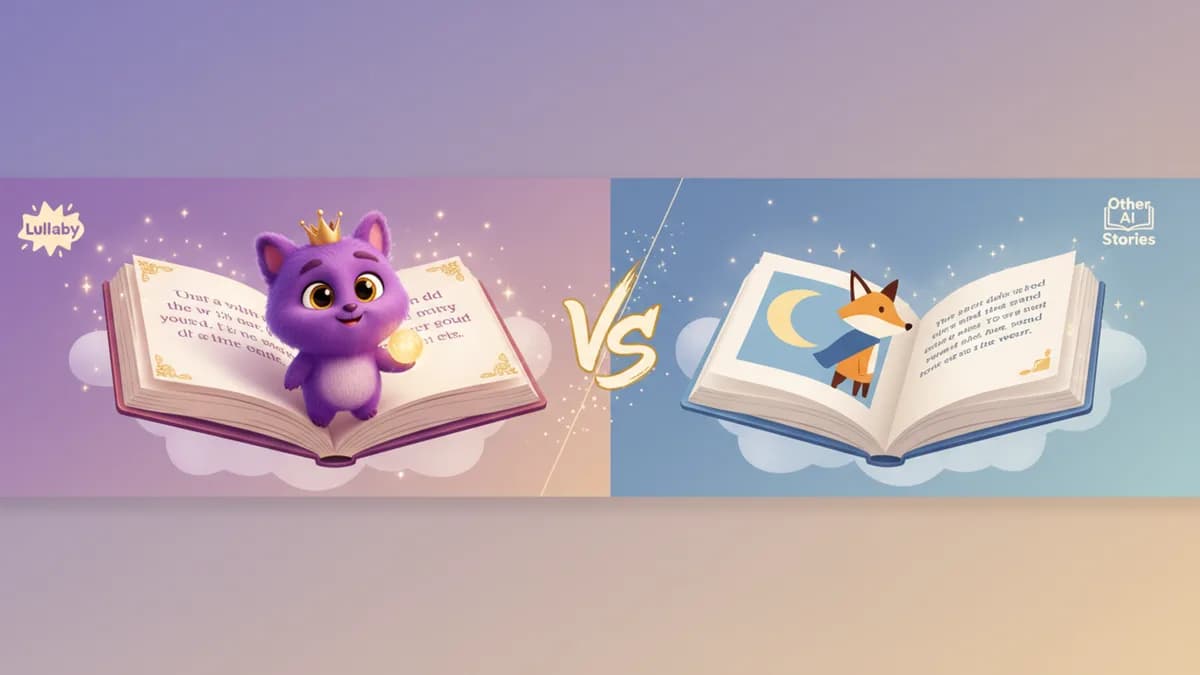
How ToonyStory Compares to Lullaby
ToonyStory is a strong choice if you want a gift book for a single child and value the animated video output. For families with multiple children, or parents who want real places from their own photos as backgrounds, Lullaby is the better fit: it supports up to 4 characters in one story, adapts outfits to match the story setting, and lets you upload your own backgrounds. ToonyStory's character limit (1–2) makes it impractical for sibling stories or family adventures.
Best for: Parents creating a gift book for a single child who value animated video output alongside the printed or digital book.
What Is the Best AI to Create a Children's Book?
The best AI children's book generator depends on what matters most to your family.
For maximum personalization, Lullaby.ink is the clear leader. No other platform combines photo-based characters, story-aware outfits, custom place uploads from your own photos, and support for up to 4 characters in a single story. If you want your child to see themselves in pajamas at bedtime and a swimsuit at the beach — in their actual bedroom and your real backyard — Lullaby is the only option that delivers.
For the lowest price, Childbook.ai offers the most affordable per-story pricing for basic personalized books, and LoveToRead.ai is unbeatable at volume with its credit system.
For interactive stories with narration, MyStoryBot offers branching "choose your destiny" stories with built-in read-aloud — unique in this category. KidzTale also includes audio narration with every story.
For educational focus, MakeMyBook.app lets you specify moral lessons and vocabulary complexity, while LoveToRead.ai is purpose-built for classrooms with grade-level targeting, comprehension questions, and spelling word integration.
For free experimentation, Google Gemini generates stories at zero cost, though you sacrifice convenience and personalization depth.
Can I Use AI to Illustrate My Children's Book?
Yes — and this is worth expanding on because there are two distinct use cases.
If you want AI to write the story AND illustrate it: Every platform on this list does this. You describe the adventure, the AI writes the text and generates illustrations simultaneously.
If you've already written the story and just need illustrations: Lullaby supports this directly. Paste your finished story text into the prompt field and Lullaby preserves your exact words while generating illustrations for each page. If the prompt looks like a complete written story rather than a description, it keeps the text as-is and focuses entirely on the illustrations. You can also add per-page illustration instructions to control exactly what appears in each scene — character positions, setting details, camera angle. See the full guide to illustrating your own story in the help center.
The key differences between platforms when illustrating are quality and consistency:
- Dedicated platforms (Lullaby, Childbook.ai, KidzTale, MakeMyBook.app, MyStoryBot, LoveToRead.ai, CreateStory.ai) maintain character consistency across all pages. Your child looks the same from the first page to the last.
- General AI tools (Google Gemini, ChatGPT) generate individual images but struggle to maintain a consistent character appearance across multiple illustrations.
If you've already written your story and just need illustrations: Lullaby supports this directly. Paste your finished story text into the prompt field — Lullaby detects it's a written story and preserves every word exactly as you wrote it, generating only the artwork. You can also add per-page illustration notes to control what appears in each scene: character positions, setting details, camera angle. The result is a complete illustrated picture book using your exact words. See the full guide to illustrating your own story for step-by-step instructions.
If you are writing your own children's book and need illustrations, a dedicated AI picture book generator will save you significant time compared to generating and curating images one by one with a general-purpose AI tool. For help choosing the right visual style, see our children's book illustration styles guide.
Is It Legal to Use AI to Write a Children's Book?
Yes, using AI to write and illustrate a children's book for personal use is legal. Parents create AI-generated storybooks for their families every day without legal concerns.
If you plan to commercially publish or sell an AI-generated book, the legal landscape is more nuanced. Copyright rules around AI-generated content vary by country and are evolving. For commercial use, consult a legal professional familiar with intellectual property and AI-generated works in your jurisdiction.
For personal family storybooks — which is what most parents use these platforms for — there are no legal barriers.
AI Storybook Maker vs AI Children's Book Generator: What's the Difference?
You will see these tools called different names — AI storybook maker, AI children's book generator, AI kids book creator, AI picture book generator. They all refer to the same category: apps that use AI to create illustrated storybooks for children.
The term "AI storybook maker" tends to emphasize the creation process (you make a book), while "AI children's book generator" emphasizes the AI doing the heavy lifting. In practice, the best platforms combine both: you provide the creative direction (characters, story idea, art style) and the AI generates the full illustrated book.
All eight platforms reviewed above are AI storybook makers. The key differences are in personalization depth, creative freedom, and output quality — not in the underlying category.
How to Choose the Right AI Children's Book Generator
Whether you are looking for an AI children's book generator, an AI storybook maker, or a simpler AI kids book creator, ask yourself these questions:
How important is personalization? If you want your child's actual likeness, story-aware outfits, and real places from your photos, choose Lullaby. If basic name and photo personalization is enough, more affordable options work fine.
Do you want creative freedom or guided themes? Lullaby and LoveToRead.ai let you write any story prompt. KidzTale and Childbook.ai offer curated themes and templates. Both approaches have merit depending on whether you have a specific story in mind.
How many characters? If siblings need to star together, Lullaby supports up to 4 characters. Most competitors limit you to one.
Is audio narration or interactivity important? MyStoryBot offers interactive branching stories with narration. KidzTale includes narration with every story. LoveToRead.ai offers videobook conversion.
What is your budget? Free (Google Gemini) to ~4 EUR (MakeMyBook.app) to $14.99 per story (Lullaby) to under $1 at volume (LoveToRead.ai). MyStoryBot has a free tier with a Pro upgrade. Printed books range from $29.99 to $59.99.
Final Verdict
Every platform on this list creates personalized AI children's books, but they serve different needs. Here is who each one is best for:
| If you want... | Choose... |
|---|---|
| Deepest personalization (outfits, places, 4 characters) | Lullaby.ink |
| Lowest per-book price | Childbook.ai |
| Quick European-market picture books with moral lessons | MakeMyBook.app |
| Interactive branching stories with narration | MyStoryBot |
| Classroom and educational tools | LoveToRead.ai |
| Simple single-child adventures | CreateStory.ai |
| Themed stories with audio narration | KidzTale |
| Animated video output for single-child gift book | ToonyStory |
| Free story generation (DIY) | Google Gemini |
For most families looking for the best AI children's book generator, Lullaby.ink offers the most complete package: photo-based characters with story-aware outfits, custom backgrounds from your own photos, multiple characters starring together, 7 art styles, and professional print options. Create your AI children's book free at Lullaby.ink — you can create and preview the first 5 pages before paying.
This guide was written by Nathan, father of three and founder of Lullaby.ink. He built Lullaby after spending an entire day piecing together different AI tools just to make one storybook where all three of his kids could star together. The goal: every parent should be able to do that in minutes. Learn more about how Lullaby was built.
Related Reading
- How to Make an AI Storybook for Your Child — Step-by-step guide to creating your first AI kids book
- Best Personalized Children's Books in 2026 — All personalized book options compared
- How to Create a Multi-Character AI Picture Book — Step-by-step guide for sibling stories
- How to Write Great Story Prompts for AI Children's Books — Get better results from any AI book generator
- Lullaby vs Google Gemini Storybook — Head-to-head comparison of the best paid vs free option
- Children's Book Illustration Styles Guide — Understanding art style options
- The Science of Bedtime Stories — Why personalized stories work
- Personalized Gift Ideas for Kids in 2026 — More ways to create meaningful gifts
- Best Personalized Christmas Books for Kids (2026) — Photo-based vs name-only Christmas books, compared