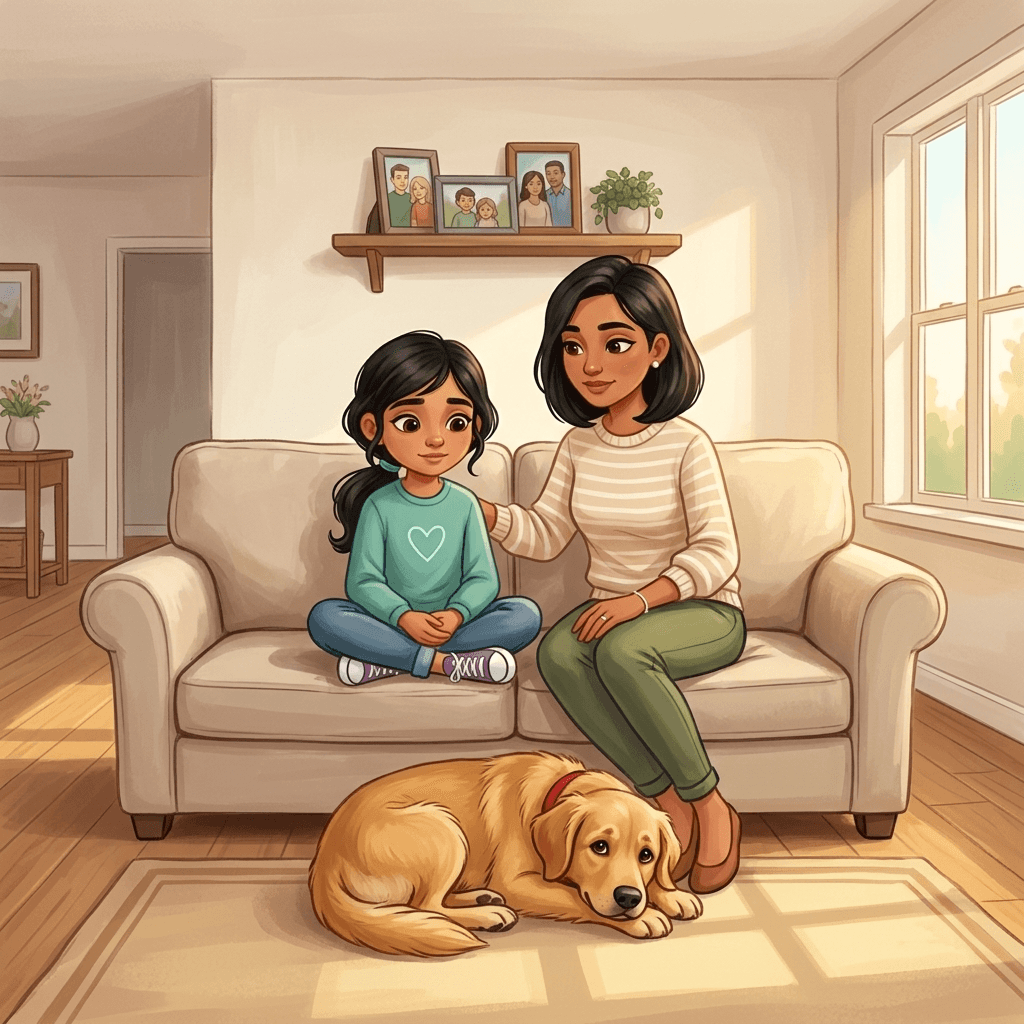
When a family pet dies, it is often a child's first real meeting with death. The dog or cat was simply part of home, and now it isn't.
I'm a father of three, not a grief counsellor, and nothing here replaces one. What follows is what children's grief specialists generally agree on, put plainly, and where a book can help.
What Actually Helps a Child Who Lost a Pet
Use the real word. Say the pet died. It feels harsh to adult ears, but it is clearer and kinder to a child. "We lost Biscuit" can sound like he might be found. "He went to sleep" can make bedtime frightening.
Explain the euphemisms you can't avoid. If the vet helped the pet die, a child will probably hear the phrase "put to sleep" from someone. Explain it before they do: "Biscuit was very sick and his body couldn't get better. The vet gave him a medicine so he could die peacefully, without hurting. Dying is not like sleeping. He won't wake up."
Answer the same questions again. Young children often ask "When is Biscuit coming back?" days after you've explained. That isn't a failure to listen. It's how they work out that something is permanent. Answer gently, the same way, each time.
Let them feel what they feel. Some children cry for days; some ask one question and go back to playing; some fall apart a month later over an empty food bowl. All of these are normal.
Remember the happy moments out loud. Most children want to keep talking about the pet: the time she stole a whole sandwich, the way he waited at the window. Saying the pet's name tells a child that the love didn't end, even though the life did.
Watch for guilt. Children sometimes believe they caused the death, because they were cross with the pet, or forgot to feed it once. If you hear that, say clearly that nothing they did or thought made the pet die.
What Children Understand at Different Ages
- Under 3: they won't grasp death, but they notice the absence and the sadness around them. Keep routines steady and give extra closeness.
- 3 to 5: they often think death is temporary or reversible. Short, concrete, repeated answers work best.
- 6 to 8: they start to understand that death is permanent and happens to every living thing. Expect questions about whether it will happen to you or to them.
- 9 to 12: they understand death much as adults do, and may hide their grief to seem grown up. Make space for it without forcing it.
What to Get a Kid Who Lost a Pet
The best gifts help a child remember, not replace. A new puppy the following week usually answers an adult's discomfort more than a child's grief.
Things that tend to help: a framed photo of the child with the pet, a memory box for the collar and a favorite toy, an afternoon drawing the pet together, or a book. A general children's book about losing a pet gives a child words for feelings they can't name yet. A book with their pet in it goes further: every page shows the animal they knew, next to them.
How a Personalized Pet Memorial Book Can Help
With Lullaby, you upload a photo of your child and a photo of your pet, and both become illustrated characters in the same story. You can add up to four characters, so a parent, a sibling, or a grandparent who loved the pet can be in it too.
Unlike a photo album, it's a story with a gentle ending. A child can reread it and point at the page where the dog jumped in the puddle. It gives the memories a shape.
A few things I'd suggest when you write it:
- Spend most of the pages on the life. The walks, the games, the silly habits. The goodbye can be one or two quiet pages near the end, or not shown at all.
- Keep the ending warm, not tragic. Love that stays, memories that are still there, a family that misses them together.
- Use your child's own words. If they've told you a favorite memory, put it in exactly as they said it.
- Leave out anything you haven't told them. The book should never be the way a child first learns something about how the pet died.
Gentle Story Ideas by Age
Ages 2–4
- "A Day with Biscuit" — a simple, rhythmic story of an ordinary day with the pet: breakfast, the garden, a game of fetch, a cuddle on the sofa. Calm and short. Avoid ending on the pet "going to sleep", which can blur sleep and death for this age.
- "Where Biscuit Liked to Be" — a page for each favorite spot: the window, the sofa, the warm patch by the door. Good for very young children who remember places more than events.
Ages 4–7
- "The Best Things About Biscuit" — the child tells the reader all the things that made this pet special, ending with "and I will always remember." Lets the child be the one doing the remembering.
- "Biscuit's Happy Days" — three or four real memories turned into short adventures, with a final page where the family looks at a photo and smiles together.
- "Always in My Heart" — the child and a parent sit together and remember the walks, the cuddles and the silly moments, and learn that love doesn't disappear when someone dies.
Ages 7–12
- "The Year We Got Biscuit" — the pet's whole story, from the day they came home to the day they died, told honestly but gently. Suits older children who want the full picture.
- "Thank You, Biscuit" — a letter-style story where the child thanks the pet for specific things: being there on the first day of school, sitting with them when they were sick. Many older children find gratitude easier to say than sadness.
When It May Be Too Soon
There is no right timeline. In the first raw days, a child usually needs a parent, not a project. If your child turns away whenever the pet is mentioned, wait.
A good sign a child is ready is when they start telling stories about the pet by themselves. For many families that's a few weeks later; for some, months.
If your child's sadness doesn't ease over time, or affects sleep, eating or school for weeks, it's worth talking to your pediatrician or a child counsellor.
A Short Note for Parents
You're probably grieving too. It's fine for your child to see you cry. It shows them that the family can be sad together and still be okay.
You don't need perfect words. "I miss her too" is often enough.
How to Make a Pet Memorial Book
- Choose the photos. One clear photo of your child, and one of your pet where their face and markings are easy to see. Add a parent or sibling if you want them in the story.
- Describe the story. Write the pet's name, a few real memories, their habits, and how you want it to end. For example: "A story about Maya and our golden retriever Sunny, who loved chasing leaves and sleeping on Maya's feet. Show their favorite days together, and end with Maya and her mom looking at a photo of Sunny and smiling."
- Read the free preview. Read it yourself first, before your child does, and change anything that doesn't feel right.
- Unlock it if it's right. The digital book is $14.99. If you'd like something your child can keep on their shelf, a printed book is an optional step afterwards, from $29.99 for softcover.
If you'd like more on putting a pet into a story in general, our guide to personalized pet storybooks covers how to write a pet's personality into the story.
FAQ
What do you get a kid who lost a pet?
Something that helps them remember rather than something that replaces. A framed photo of them with the pet, a memory box for the collar and a favorite toy, a drawing session where they make pictures of the pet, or a storybook with their own pet in it all work. Most of all, a child who has lost a pet needs time with an adult who is willing to talk about the animal by name.
How do I explain a pet's death to a young child?
Use the real words. Say the pet died, and explain what that means in plain terms: their body stopped working, they do not breathe or eat or feel pain anymore, and they will not come back. Phrases like "went to sleep" or "went away" can confuse young children or make bedtime frightening. If the vet helped the pet die, you can say the vet gave a medicine that let them die peacefully because their body was too sick to get better.
Is a children's book about losing a pet a good idea?
For most children, yes. A story gives them words for feelings they cannot name yet, and reading together gives you a natural, low-pressure moment to talk. A book about their own pet goes further: it keeps the happy memories in one place they can return to whenever they want.
When is it too soon for a pet memorial book?
There is no fixed timeline. If your child is still in the first raw days, or turns away whenever the pet is mentioned, wait. Many families make the book a few weeks later, when the child starts telling stories about the pet on their own. Making it together, and letting the child choose the memories, is often more helpful than handing over a finished book.
How does a personalized pet memorial book work?
You upload a photo of your child and a photo of your pet, and both become illustrated characters. You describe the story you want, for example the happy memories they shared, and Lullaby writes and illustrates it. You can include up to four characters, such as a parent or a sibling. Creating and previewing is free. The digital book is $14.99, and a printed book is an optional step afterwards.
Related Reading
- Personalized Pet Storybooks — a story starring your child and their real dog or cat
- Personalized Sibling Books — stories where more than one child gets a real part