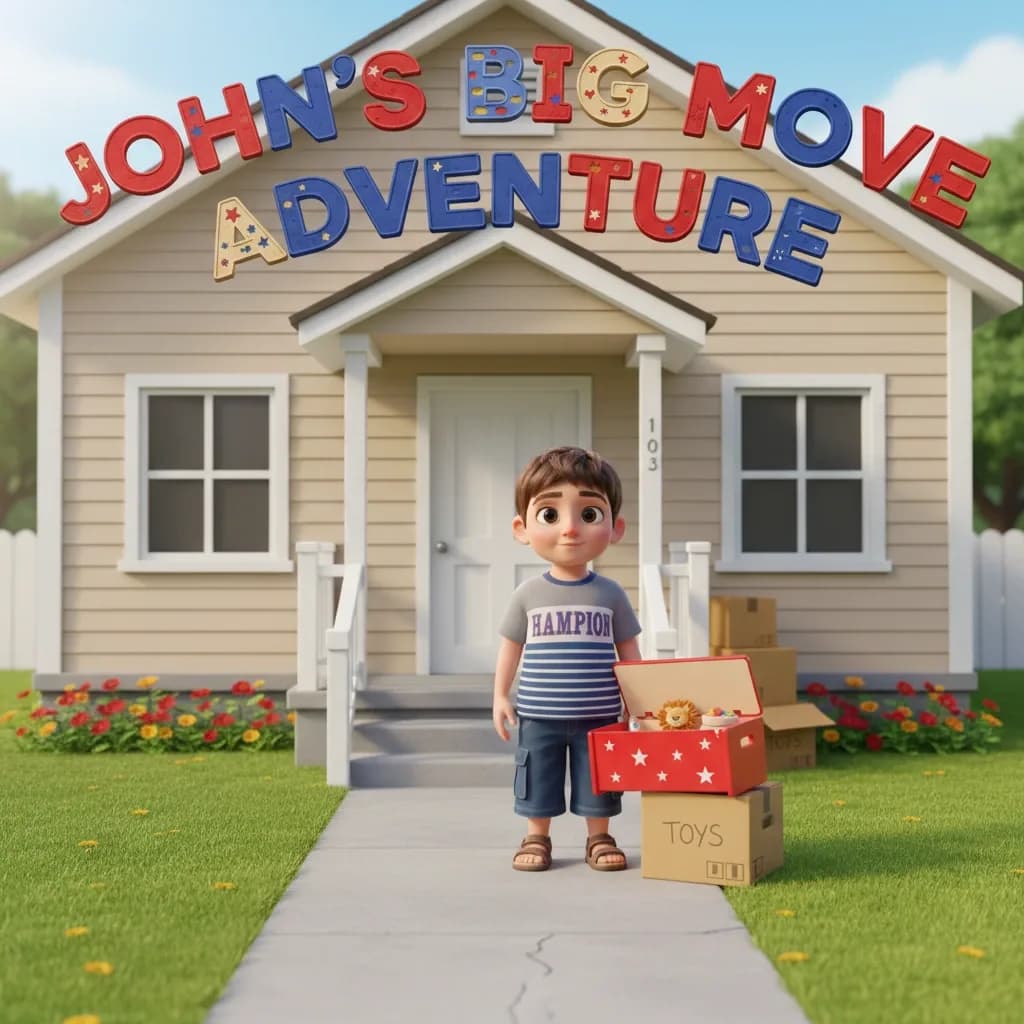
Moving to a new home is one of the biggest transitions a young child can face. The familiar bedroom walls, the neighbor friends, the secret hiding spots—all suddenly gone. For children ages 3-7, who thrive on routine and predictability, this upheaval can feel overwhelming.
That's why we created "John's Big Move Adventure"—a heartwarming story that meets children exactly where they are in their feelings, then gently guides them toward excitement about what's ahead.
Top Books About Moving for Kids
If you're looking for the best books about moving for kids in 2026, here are proven titles that help children process relocation—plus one approach that goes further than any off-the-shelf book.
-
"The Berenstain Bears' Moving Day" by Stan & Jan Berenstain — A classic that follows the Bear family as they leave their old treehouse for a new home. Great for ages 3-6, it normalizes the mix of sadness and excitement children feel during a move.
-
"Alexander, Who's Not (Do You Hear Me? I Mean It!) Going to Move" by Judith Viorst — Captures the anger and resistance children often feel about moving. Alexander's stubbornness is relatable and funny, making it easier for kids ages 5-8 to talk about their own frustrations.
-
"The Moving Book: A Kids' Survival Guide" by Gabriel Davis — An interactive activity book that gives children hands-on ways to process their emotions, draw their old and new homes, and plan for the move. Best for ages 6-10.
-
A personalized moving story starring your child (Lullaby) — The most effective approach is a story where your child is the main character. With Lullaby's personalized children's books, you can include your child's name, their real toys, and their specific worries. When children see themselves bravely navigating a move, it builds genuine confidence. "John's Big Move Adventure" below is one example of this approach.
What Is a Children's Book About Moving?
A children's book about moving is a picture book or early reader designed to help children ages 3-8 emotionally process relocation. Unlike general children's books, moving-specific stories:
- Validate difficult emotions like sadness, fear, and anxiety about change
- Model successful coping through relatable characters
- Provide concrete strategies children can apply to their own situation
- Create conversation opportunities between parents and children
As of 2026, moving is still consistently ranked among the top 5 most stressful life events for children. Books provide "emotional rehearsal"—a safe way to experience and process feelings before or during the actual transition.
"John's Big Move Adventure" incorporates all these elements, following a young boy from the sadness of leaving his familiar room to the excitement of making new friends at his new home.
A Story That Validates Big Feelings
"John's Big Move Adventure" doesn't pretend that moving is easy. It starts with John sitting in his empty bedroom, surrounded by boxes, feeling that heavy sadness many children know but can't quite name. He remembers the pillow forts, the bedtime stories, the comfort of his familiar corner.
This honest acknowledgment of grief is important. Research on how stories help children overcome fears shows that children need to know their feelings are valid before they can move through them. John misses his old room. He worries about making new friends. His tummy feels "twisty"—a sensation many anxious children will immediately recognize.
The Power of Comfort Objects
A beautiful thread running through this story is John's relationship with his toys. His rocket, his stuffed lion, his puzzle pieces—these aren't just playthings. They're emotional anchors.
When preparing your child for a move, let them pack a special bag of comfort items to keep with them during the journey. Having beloved toys accessible (not boxed up) provides crucial emotional security during transitions.
John's realization that his "adventure box" goes wherever he goes teaches children something profound: the things that make home feel like home aren't the walls—they're the loved objects and people that fill them.
Finding Courage in Small Steps
What makes this story special is how it models emotional resilience without dismissing real worries. John doesn't magically stop feeling sad. Instead, he takes small, brave steps:
- He remembers his mom's words about his "brave heart"
- He carries his own toy box to the car (a tangible act of agency)
- He places his toys one by one in the new room, transforming it
- He takes a deep breath before approaching new children at the park
These small victories show children that courage isn't the absence of fear—it's taking action despite feeling scared.
Themes That Support Emotional Development
Embracing Change
Rather than fighting the transition, John learns to hold two truths at once: he can miss his old home AND feel excited about his new one. This emotional complexity is something children need to learn, and stories are a safe place to practice.
Making New Friends
The story's climax comes when John meets children at the neighborhood park. His internal experience—the fluttering tummy, the big breath, the nervous-and-excited feeling—normalizes social anxiety while showing that reaching out is worth the risk.
Creating Home Anywhere
Perhaps the most powerful message is that home is something we create, not just somewhere we live. By placing his toys, hanging his drawings, and making new memories, John transforms a "stranger's room" into his own space.
The Illustration Style
"John's Big Move Adventure" is brought to life in the Pixar Adventure style—polished 3D animation with warm cinematic lighting. This familiar visual language feels like stepping into a Pixar film, immediately putting children at ease.
The warm color palette and expressive character faces help children connect emotionally with John's journey. When John feels sad, they see it in his posture and expression. When he finally smiles at his new friends, the warmth radiates from the page.
Tips for Reading This Book With Your Child
Getting the most out of a children's book about moving requires more than just reading the words. Here's how to make it a meaningful experience:
Before reading:
- Choose a calm, quiet time when your child is receptive
- Let them hold the book and look at the cover first
- Ask what they think the story might be about
During reading:
- Pause at emotional moments and ask "How do you think John feels?"
- Connect to your child's experience: "Your toys are coming too, just like John's"
- Let your child ask questions or express worries that come up
After reading:
- Ask which part was their favorite
- Discuss what John did that was brave
- Talk about what your child is excited about (new room, new playground, etc.)
Perfect For
Age Range: 3-7 years old
Best For:
- Families preparing for an upcoming move
- Children who have recently relocated and are still adjusting
- Bedtime reading during the weeks before or after a move
- Children who struggle with transitions or changes in routine
Reading Occasions:
- Bedtime (the story ends with John peacefully falling asleep)
- During packing days when emotions run high
- After arriving at a new home, as a processing tool
- Anytime your child expresses worry about moving
Creating Your Own Personalized Moving Story
Every child's moving experience is unique. Maybe your child is leaving behind a best friend, or a beloved backyard, or a special tree they loved to climb. A personalized story can address these specific losses and hopes.
With Lullaby, you can create a story where your child is the hero of their own moving adventure. Browse personalized moving story ideas and create a book featuring your child's actual face, their real worries, and their true sources of comfort. When children see themselves succeeding in a story, they begin to believe they can succeed in real life too.
"John's Big Move Adventure" was created by a parent who wanted to help their child navigate an upcoming relocation. Stories like this remind us that the best way to support children through hard times isn't to minimize their feelings—it's to walk alongside them, one page at a time.