"My tummy feels wiggly." If you've ever heard your child say something like this when a dog approaches, you know exactly how common fear of dogs is in young children. Even distant barking can trigger anxiety for some kids. They cling to your legs, bury their faces, or freeze in place.
You're not alone. Research suggests that fear of animals, particularly dogs, is one of the most common childhood fears, affecting children from toddlerhood through the early school years. The good news? With patience, the right approach, and stories that model success, most children can learn to feel safe around dogs.
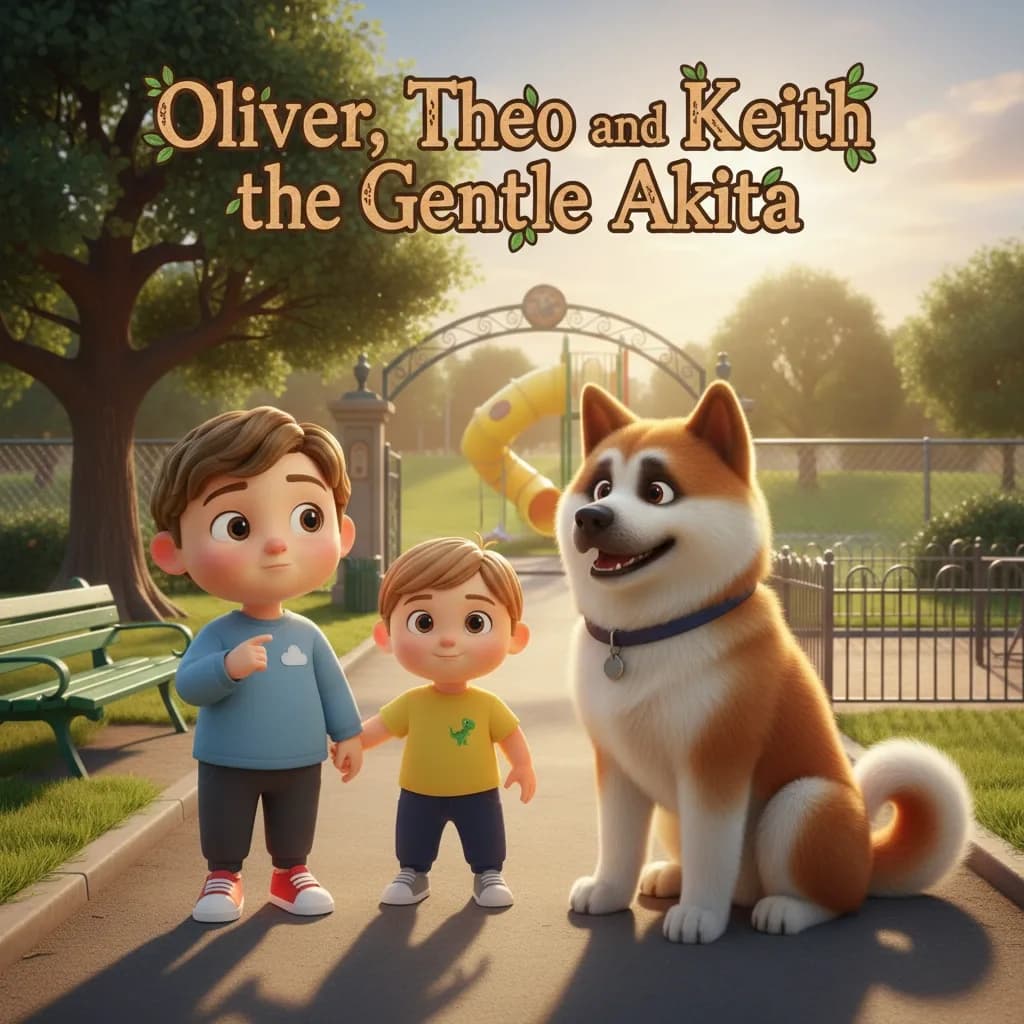
Oliver, Theo, and Keith the Gentle Akita tells the story of two brothers who transform from "wiggly tummy" fear to confident dog companions - and it offers parents a practical roadmap for helping their own children make that journey.
Oliver, Theo, and Keith the Gentle Akita is a personalized story about two brothers who overcome their fear of dogs by learning three simple safety rules, ultimately welcoming a gentle Akita into their family.
Two Brothers, One Big Fear
Oliver is four. His little brother Theo is two. They're the kind of brothers who do everything together - play together, explore together, and yes, feel scared together. When they hear a dog bark, even from far away, their tummies "feel wiggly." When a friendly dog approaches at the park, they want to hide behind Mom's legs.
Their fear isn't irrational - it's developmentally appropriate. Young children are still learning to read body language and predict behavior. Dogs are fast, loud, and unpredictable compared to the stuffed animals at home. What looks like "just a friendly dog" to an adult can feel overwhelming to a small child.
But Oliver and Theo's story shows that fear doesn't have to be permanent. With the right guidance and a very patient Akita named Keith, these brothers discover that dogs can become some of the best friends you'll ever have.
The Three Rules That Change Everything
The heart of this story is its practical wisdom. When Oliver and Theo meet Keith at the park, his owner doesn't just say "Don't worry, he's friendly." Instead, she teaches them three specific rules that give the boys a sense of control:
Rule 1: Always Ask the Grown-Up First
Before touching any dog, ask the owner if it's okay. This simple step does several things: it teaches respect for both the dog and owner, it creates a pause that breaks the fear-reaction cycle, and it ensures the dog is actually safe to approach.
Rule 2: Let the Dog Come to You
Stand still like a tree. Don't run toward the dog or away from it. Let the dog approach on their own terms, sniff you, and decide they feel comfortable. This rule is powerful for fearful children because it puts them in control - they're not chasing the scary thing, they're simply standing still.
Rule 3: Only Gentle Hands
No grabbing, climbing, or poking. Only gentle, slow touches. This protects both the child and the dog, and it teaches children to respect another creature's boundaries.
Practice these three rules at home with stuffed animals before encountering real dogs. Have your child practice "standing like a tree" and using "gentle hands" on their favorite plush toy. When they encounter a real dog, the rules will feel familiar rather than overwhelming.
Why These Rules Work for Fearful Children
What makes these rules so effective isn't just that they keep children safe - it's that they transform an unpredictable situation into a predictable one. Fear thrives on uncertainty. When children don't know what to do, they freeze, flee, or panic.
But when children have clear steps to follow, something shifts. "First I ask, then I stand still, then I use gentle hands." The scary situation now has a structure. The child has a role to play. Instead of being at the mercy of the dog's behavior, they're following a protocol they've practiced.
This is the same principle behind how stories help children overcome fears - they provide a mental rehearsal that makes the real situation feel more manageable.
The Sibling Factor
One of the most touching elements of Oliver and Theo's story is how they face their fear together. Oliver, as the older brother, doesn't pretend to be fearless - he acknowledges his wiggly tummy too. But he's also the first to try the rules with Keith, modeling bravery for his little brother.
Theo watches Oliver succeed, and that gives him courage. When Oliver gently pets Keith and nothing scary happens, Theo wants to try too. This is social learning at its finest - younger siblings learn so much from watching their older siblings navigate new experiences.
If you have multiple children who are fearful of dogs, consider reading this story together. The brothers' journey normalizes the fear while showing that it can be overcome step by step. For more on how siblings in stories create powerful shared experiences, see our feature guide.
Patient Practice, Real Progress
Oliver and Theo don't overcome their fear in a single afternoon. The story shows them practicing the rules multiple times, getting more comfortable with each interaction. Some days are harder than others. But over time, their confidence grows.
This is exactly how fear extinction works in child development. Brief, positive exposures, repeated over time, teach the brain that the feared object is actually safe. Each time Oliver and Theo approach Keith, follow the rules, and have a positive experience, their brains update their "dogs are scary" belief just a little bit.
Parents often want to solve their child's fear in one dramatic breakthrough. But real progress usually looks like this story - gradual, patient, with plenty of practice and the occasional step backward.
Research on childhood fears shows that gradual exposure, combined with coping skills, is more effective than avoiding the feared object or forcing confrontation. Stories like Oliver and Theo's model this patient, step-by-step approach.
A Warm Resolution
We won't spoil the ending, but Oliver and Theo's journey with Keith reaches a deeply satisfying conclusion that demonstrates the ultimate reward of facing your fears with patience and courage. The final scenes capture something that every parent of a formerly-fearful child recognizes - that moment when your child moves from anxiety to genuine comfort and joy.
The story's ending also shows that overcoming fear doesn't just remove something negative; it opens the door to something wonderful. Fear kept Oliver and Theo from experiencing the unconditional love that dogs offer. Working through that fear gave them access to something precious.
The Pixar Adventure Style
Oliver, Theo, and Keith the Gentle Akita is illustrated in Pixar Adventure style - polished 3D animation with warm, cinematic lighting. This style brings an emotional depth that matches the story's themes perfectly.
Why This Style Works
The Pixar aesthetic is instantly recognizable to modern children who've grown up with films like Toy Story and Inside Out. The warmth of the lighting and the expressiveness of the characters help children connect emotionally with Oliver, Theo, and Keith.
Keith the Akita is rendered with particular care - his calm, gentle expression is visible in every frame, helping fearful readers see that this is a dog who can be trusted. The Pixar style excels at capturing subtle emotions in characters' eyes, which is essential for a story that's all about learning to trust.
Perfect For
Best suited for children ages 2-6, especially those who are fearful of dogs or whose families are considering getting a pet.
This story is ideal for:
- Children afraid of dogs - The gradual approach and clear rules model exactly how to work through this fear
- Families considering getting a dog - Prepares children for what to expect and how to interact safely
- Siblings ages 2-6 - The two-brother dynamic makes it especially resonant for sibling pairs
- Bedtime reading - The warm, reassuring ending promotes feelings of safety before sleep (see our guide on bedtime routines by age)
- Homes that already have dogs - Reinforces safety rules and positive interactions
- Preparing for visits to homes with dogs - Read before visiting grandparents, friends, or relatives who have pets
Creating Your Child's Dog Safety Story
Every child's relationship with fear is unique. Maybe your child is afraid of large dogs but fine with small ones. Maybe they had a scary experience with a barking dog at the park. Maybe they love dogs in books and movies but freeze around real ones.
With Lullaby, you can create a personalized story that addresses your child's specific situation. Upload their photo, describe the fear they're working on, and watch as they become the hero of a story about facing that exact challenge.
Seeing themselves successfully navigate their fear in story form is a powerful form of mental rehearsal. It plants the seed: "If story-me can do it, maybe real-me can too."
Whether your child is working through fear of dogs, preparing to welcome a family pet, or simply learning important safety rules, stories that meet them where they are - and show them where they can go - are one of the most powerful tools parents have.
Because every child deserves to feel safe, warm, and loved - whether there's a gentle Akita sleeping on the rug or not.
Looking for more stories that help children navigate big emotions? Explore our collection of personalized bedtime stories designed to help your child see themselves as the hero of their own adventure.