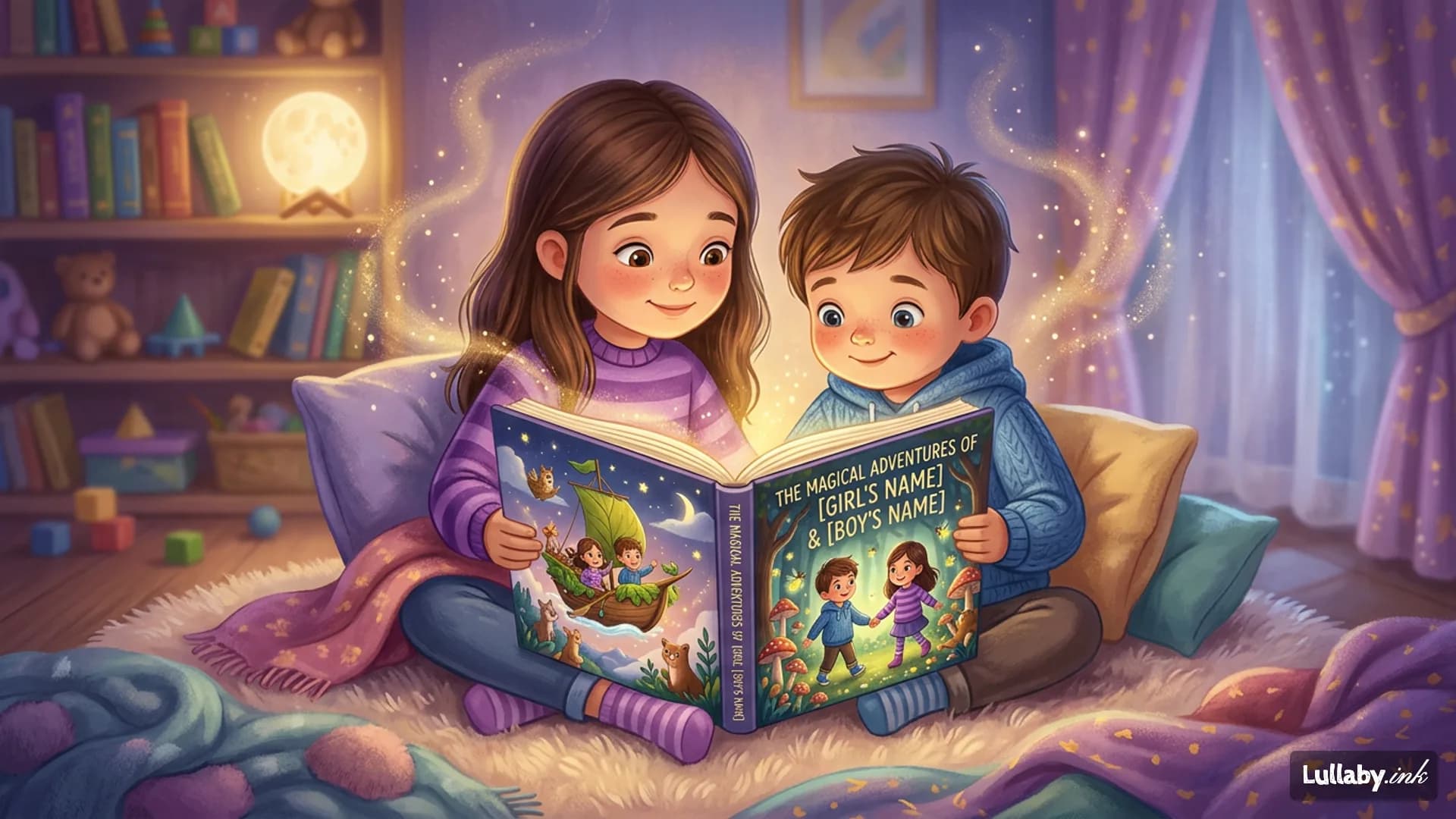
I still remember the exact moment. We had just received a personalized book for our older daughter, her face plastered across every page as she battled dragons and discovered treasure. She was thrilled. Her little brother sat beside her, watching with an expression I'll never forget: a mixture of longing and confusion.
"Where am I?" he asked quietly.
That question broke my heart a little. And it made me realize something that every parent of multiple children eventually discovers: in a world built for one protagonist, having more than one child creates an accidental exclusion.
Sibling books for kids are children's stories specifically designed to feature brothers and sisters as central characters, either addressing sibling dynamics (like welcoming a new baby or resolving rivalry) or simply celebrating the sibling relationship through shared adventures. The best personalized sibling books go further: they feature each child as an equal co-protagonist, not just a supporting character.
The Single-Hero Problem in Children's Literature
Look at the children's books on your shelf right now. Count how many feature a single main character versus siblings sharing the spotlight. The ratio is probably lopsided, and there's a reason for it.
From a storytelling perspective, one protagonist is simpler. One hero means one journey, one transformation, one set of challenges to overcome. Publishers know this. Authors know this. It's why Harry Potter doesn't have an equally important sibling. It's why Max goes to Where the Wild Things Are alone.
But here's what publishers and authors don't have to deal with at 7:30 PM on a Tuesday: two children fighting over who gets to be "the one in the book."
Why Most Personalized Books Stop at One
Traditional personalized children's books have an additional constraint: the technical complexity of customization. When you can only swap in one name and one photo, your book can only have one star. This made sense when personalization meant physically printing a different child's face on the same template.
The result? Parents of multiple children face an impossible choice:
- Buy separate books for each child (expensive and still creates comparison)
- Choose one child for the book (guaranteed resentment)
- Skip personalized books entirely (miss out on the magic)
None of these options feel right because they aren't. Children don't experience stories in isolation. They experience them together, especially at bedtime when siblings often share reading time.
What Happens When Siblings Star Together
Something remarkable shifts when both children see themselves in the same story. I've watched it happen dozens of times now, and the transformation is consistent.
The Jealousy Dissolves
That familiar whine of "But it's HER book" simply doesn't occur when both names appear on the cover. There's no book to claim exclusively because it belongs to both of them. Instead of competing for ownership, siblings find themselves pointing at the pages together.
"Look, that's us!"
Three words that change the entire dynamic.
When introducing a sibling story for the first time, let both children hold the book together while you read. This physical sharing reinforces the message that the story belongs to them equally.
Cooperation Gets Modeled Naturally
In a single-protagonist story, the hero solves problems alone or with help from secondary characters. In a sibling story, both characters contribute to solving problems together. This isn't heavy-handed moral teaching; it's just how the narrative unfolds when two main characters share an adventure.
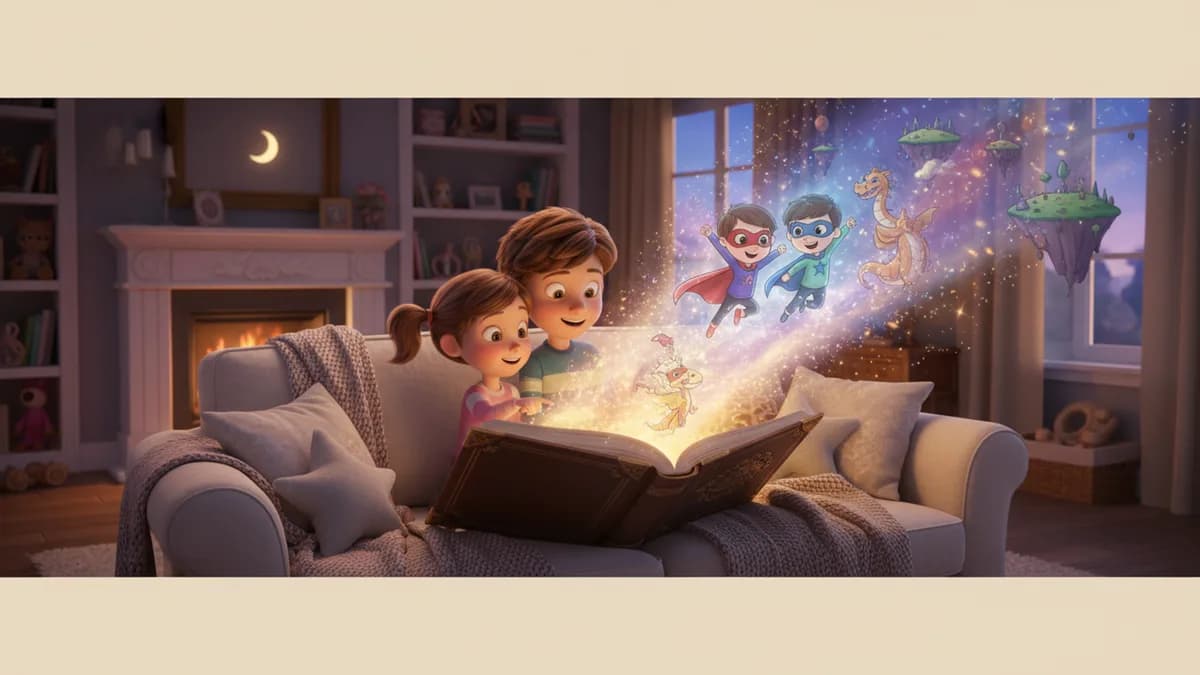
When your children see illustrated versions of themselves working together to escape a maze or calm a scared dragon, they're absorbing a template for collaboration. The story becomes a reference point you can return to during real-life conflicts: "Remember how you two worked together in the story?"
Shared Memory, Shared Ownership
Years from now, your children won't remember individual books the way they remember experiences they shared. A story featuring both of them becomes part of their collective childhood narrative, something they experienced together rather than separately. This is consistent with the science of bedtime stories: shared reading experiences create lasting neural pathways associated with security and bonding.
Parents consistently tell us that sibling stories become the most-requested books at bedtime. Not because they're objectively better stories, but because both children want to read them. When was the last time your kids agreed on what story to read?
Key Benefits of Personalized Sibling Books
Before diving into specific scenarios, here's why sibling co-star stories make a difference:
- Equal representation for each child as a main character
- Strengthened sibling bonds through shared story experiences
- Reduced sibling rivalry by modeling cooperation
- Lasting keepsake that commemorates the sibling relationship
- Increased engagement because children see themselves in the story
- No jealousy over who "owns" the book
Real Scenarios Where Sibling Stories Shine
Beyond the everyday benefits, certain moments in family life call specifically for stories that include everyone. Stories can even help children process difficult emotions, making them powerful tools during family transitions.
When a New Baby Arrives
Few transitions are harder on older children than welcoming a new sibling. Their world gets turned upside down, and no matter how much you prepare them, the reality of sharing attention hits hard.
A personalized story featuring the older child AND the new baby, perhaps an adventure where the older sibling protects their baby brother or sister from a gentle storm, or teaches them about the magical forest in the backyard, accomplishes something no amount of verbal reassurance can match. It shows the older child their new role isn't a demotion. They're still a main character. Now they just have a co-star.
Teaching Children to Share
Abstract concepts like sharing are difficult for young children to grasp because they live in the immediate moment. "Share your toys" means nothing when the toy is right there and they want it now.
But a story where two characters who look exactly like your children learn to share a magical flying carpet? That plants a seed. The next time a sharing conflict erupts, you have something concrete to reference: "Remember how you and Emma had to share the carpet to make it fly?"
Create a story specifically about sharing before anticipated sharing challenges, like hosting a playdate or visiting cousins. Reading it the night before gives children a positive framework for the next day.
Building Adventure Companions
Not every sibling story needs to teach a lesson. Sometimes the magic is simply in positioning siblings as adventure partners rather than rivals.
A story where your two children explore a candy planet, solve a mystery at grandma's house, or befriend a lonely dragon together does something subtle but important: it frames their relationship as a team. They aren't just people who happen to live in the same house. They're the heroes who do things together.
The Technical Challenge (And Why Most Companies Don't Bother)
If sibling stories are so powerful, why don't more personalized book companies offer them?
The honest answer: it's hard to do well.
When you put multiple characters in an illustrated story, you face a consistency problem. Character A needs to look like Character A on every single page, in different poses, different lighting, different outfits. Now multiply that by two or three characters. The margin for error expands dramatically.
Traditional illustration handles this through an artist's trained eye and careful reference sheets. But personalized books at scale can't employ a dedicated artist for each order. The economics don't work.
AI illustration changed this equation, but not automatically. Most AI image generation struggles with character consistency across multiple images. You might get a great image of two siblings on page one, but by page five, one of them has mysteriously changed hair color or gained ten years.
How We Solved Multi-Character Consistency
At Lullaby, we spent significant time on this specific problem because we knew it was the difference between a gimmick and a genuine family keepsake.
Our approach transforms each uploaded photo into a consistent cartoon character before story generation begins. This cartoon version becomes the reference for every scene. When the AI generates page seven's illustration of your children climbing a rainbow, it's working from established character models, not trying to recreate them from scratch.
The result: your children look like themselves throughout the story, from the cover to the final page.
We also solved a problem you might not think about until you see it done wrong: outfit changes. In real life, people don't wear the same clothes in every situation. Your children probably don't wear pajamas to the beach or swimsuits to bed.
Every scene in a Lullaby story dresses characters appropriately. Bedtime scenes show pajamas. Beach adventures feature swimwear. Birthday parties have festive outfits. This attention to detail might seem small, but it's part of what makes illustrations feel real rather than obviously computer-generated.
Beyond Siblings: Cousins, Friends, and Pets
The multi-character capability isn't limited to biological siblings. With support for up to 4 characters, families use it creatively:
Cousins who live far apart can star in adventures together, giving them a shared story to read during video calls or visits.
Best friends can become co-heroes, perfect for playdates or friendship-celebrating gifts.
Beloved pets can join the adventure too. Your children and the family dog exploring a magical forest together? That's a story that captures your specific family, not a generic version of childhood.
The flexibility means the story reflects your actual life, not a template's assumption about what families look like.
The Gift That Includes Everyone
If you're shopping for a family with multiple children, sibling stories solve the common gift-giving dilemma of either buying separate items or choosing favorites. (See our complete guide to personalized gift ideas for kids for more options.)
A single book featuring all the children in a family is:
- More thoughtful than individual gifts (it shows you considered the family dynamic)
- More economical than multiple separate books
- More likely to get read (because every child wants to read it)
- Less likely to cause conflict (no one feels left out)
For grandparents especially, a personalized story featuring all their grandchildren together becomes a keepsake that celebrates the family unit rather than individual relationships.
How to Get Started
Creating a sibling story works the same as any personalized story, just with more photos:
- Upload photos of each child (and pets, if you're including them)
- Give each character a name (the AI uses these names throughout the story)
- Describe your adventure (mention both children in your description for best results)
- Choose your art style (all 7 illustration styles work beautifully with multiple characters)
- Watch them come to life together
The whole process takes about five minutes, and your siblings-starring-together story is ready to read immediately.
When writing your story description, include both children's names and reference them doing things together. Instead of "Maya goes on an adventure," try "Maya and Leo explore a magical garden together." This helps the AI generate scenes where both characters are actively participating.
Creating Stories Where Everyone Belongs
Every child deserves to be the hero of their own story. But in families with multiple children, "their own story" often means "our story." The adventures siblings share, the challenges they face together, the silly moments that become inside jokes, these are the stories that shape how they see themselves and each other.
When you put siblings together in a personalized book, you're doing more than avoiding jealousy (though that's a nice bonus). You're creating a narrative where their relationship matters, where cooperation leads to adventure, where being part of a team is something to celebrate.
And years from now, when your children are grown and flipping through old books, they won't just remember the story. They'll remember reading it together, pointing at the pages, laughing at the silly parts. They'll remember being co-stars.
That's the gift of a sibling story. Not just a book, but a memory that belongs to everyone.
Ready to create a story where all your children are heroes? Start your sibling adventure and see them come to life together in minutes.