"No, me first!" If you've heard this phrase echo through your home multiple times today, you're not alone. Sibling sharing conflicts are one of the most common challenges parents of toddlers face—and one of the most exhausting to navigate.
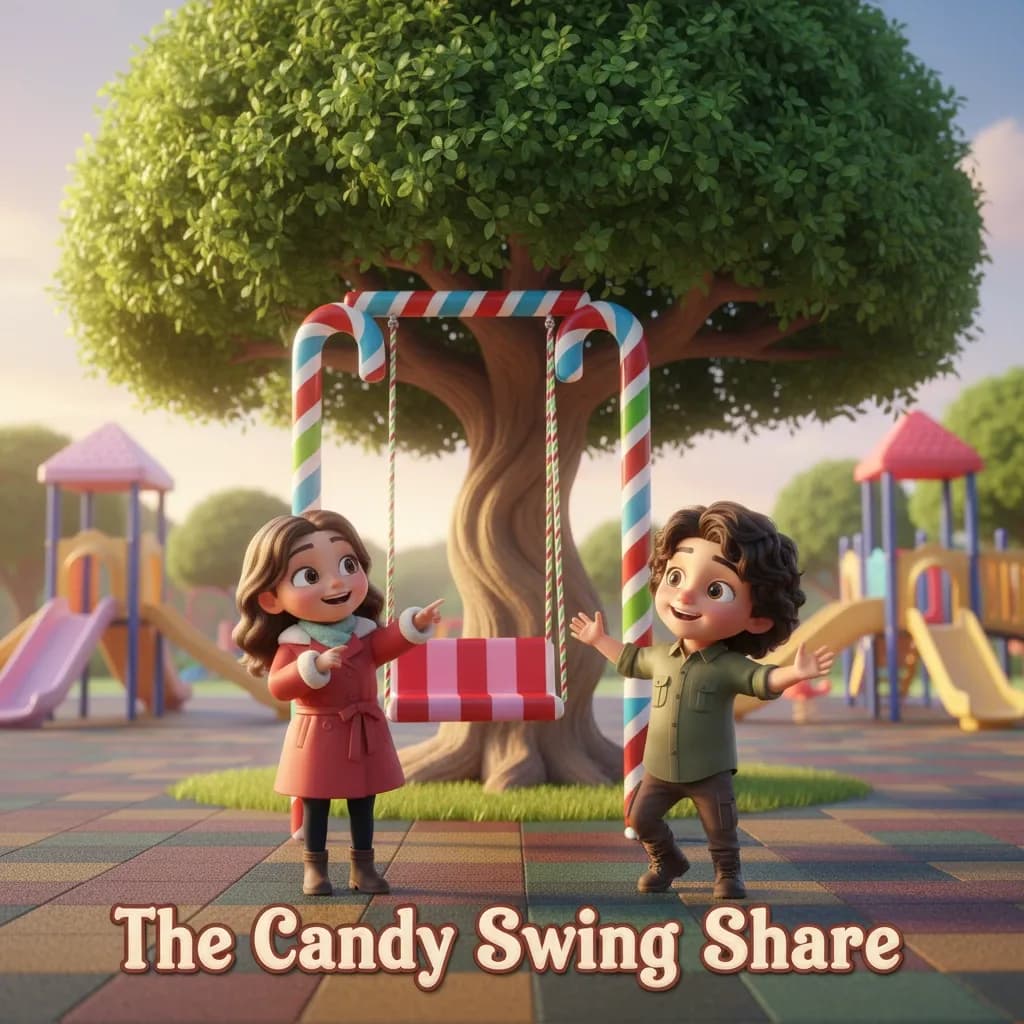
The Candy Swing Share tells the story of Maya and Rohan, 3-year-old twins who discover a magical swing made entirely of candy at the park. What starts as an exciting discovery quickly becomes a battleground. But through their journey from conflict to cooperation, these twins model exactly what parents hope their children will learn: that sharing is so much better than fighting.
The Candy Swing Share is a personalized children's story about twin toddlers who learn that taking turns transforms conflict into connection. Best for ages 2-5.
Why Sharing Is Hard for Toddlers (And That's Normal)
Before diving into Maya and Rohan's adventure, let's understand why sharing is so challenging for young children. This isn't a character flaw—it's development.
The Developmental Reality
Most children begin understanding the concept of sharing between ages 3-4, but true cooperative sharing doesn't typically develop until age 4-5. Before age 3, children are naturally egocentric. They're not being selfish—their brains simply haven't developed the capacity to consistently consider another person's perspective.
This is why turn-taking is often easier to teach than abstract "sharing." Turn-taking has clear rules: one person's turn ends, another's begins. Maya and Rohan's story leans into this reality, showing a practical turn-taking system rather than vague appeals to share.
Why Siblings Fight More Than Friends
If you've noticed your children share better with friends than siblings, you're not imagining it. Siblings compete for the same resources—including parental attention—every single day. The emotional stakes are higher, and the conflicts more frequent.
For twins like Maya and Rohan, this dynamic is amplified. They're the same age, have the same toys, want the same things, at the same time. Their story speaks directly to families navigating this daily reality.
The Story: A Magical Candy Swing
One sunny afternoon, Maya and Rohan discover something extraordinary at the park: a swing made entirely of candy. The ropes look like twisted candy canes. The seat is striped like a lollipop. It smells sweet, like bubble gum and strawberries.
There's just one problem. There's only one swing.
"I want to swing first!" says Rohan, bouncing on his toes. "No, me first!" Maya's eyebrows scrunch. Their happy feelings start to feel tight and grumpy.
What follows is a sequence every parent will recognize: Rohan hops on, Maya protests. Maya takes over, Rohan grabs it back. The swing twists and wiggles. Nobody is having fun anymore.
The Turning Point
The most powerful moment in the story comes when both children stop fighting and sit together in shared disappointment:
Their shoulders droop. Their mouths turn down. The beautiful candy swing hangs still and quiet. No one is swinging. No one is smiling.
This moment of shared sadness is where real learning begins. The twins experience the natural consequence of their conflict—not through punishment, but through the simple reality that fighting means nobody wins.
Then, sitting side by side, they think. And a little idea starts to grow.
This moment is perfect for pausing with your child. Ask: "How do you think Maya and Rohan are feeling right now?" Let them identify the emotions before reading the solution.
How Maya and Rohan Discover Turn-Taking
"What if we take turns?" Rohan says. His eyes brighten.
Maya sits up straighter. "Yes! First you swing, and I push. Then I swing, and you push!"
This solution is child-driven—no adult swoops in to fix the problem. Maya and Rohan figure it out together through dialogue and cooperation. This empowers young readers to see themselves as capable problem-solvers.
What happens next transforms the story. Rohan climbs on first while Maya pushes. "Go, Rohan, go!" she cheers. When they switch, Rohan cheers just as enthusiastically: "Go, Maya, go!"
The story's key insight emerges: sharing doesn't mean getting less. When Maya cheers for Rohan, her happiness increases. When they cooperate, both children get more joy than either would have gotten alone.
The lesson children absorb: "Sharing is so much better than fighting." This line, repeated in the story, gives parents a touchstone to reference in real-world moments.
The Emotional Journey: Why This Story Works
This story delivers exceptional social-emotional learning by walking children through the entire arc of conflict and resolution—not by telling them sharing is good, but by showing them why.
Emotional Vocabulary Building
The story introduces feelings in context: "bouncy and happy," "tight and grumpy," "wobbly," "mad." When Maya's eyebrows scrunch and the twins' shoulders droop, children see physical manifestations of feelings they recognize in themselves. This builds the language they need to express their own emotions.
Self-Regulation Modeling
The middle pages model the pause-and-reflect process that children this age are just beginning to develop. The twins experience disappointment, sit with it, and then work through to a solution—exactly the self-regulation skills parents hope their children will internalize.
Cause and Effect
The story clearly illustrates that fighting leads to unhappiness for everyone, while sharing multiplies joy. This isn't stated as a lecture—it's shown through the progression from "No one is really having fun" to "Sharing feels sweet and fun."
Understanding how stories help children overcome fears and process difficult emotions reveals why narrative works better than direct instruction for social-emotional learning.
Discussion Questions for Parents
Reading The Candy Swing Share together creates natural opportunities for conversation. Here are prompts to deepen the experience:
Before Reading
- "Have you ever wanted something at the same time as someone else? What happened?"
- "What do you think a candy swing might look like? What would it smell like?"
During Reading (Pause at the Sad Moment)
- "How do you think Maya and Rohan are feeling right now? Look at their faces."
- "What would you do if you were Maya or Rohan?"
After Reading
- "What did Maya and Rohan figure out that helped them both have fun?"
- "Can you think of a time when you shared something and it made playing more fun?"
- "The story says sharing 'feels sweet.' What does sharing feel like to you?"
The best conversations happen naturally. Don't force these questions—let your child's reactions guide you. Sometimes a simple "What did you think?" opens more doors than a structured discussion.
The Pixar Adventure Style
The Candy Swing Share is illustrated in Pixar Adventure style—polished 3D animation with warm, cinematic lighting. This style brings an emotional depth that matches the story's themes perfectly.
Why This Style Works for Emotional Stories
The Pixar aesthetic excels at conveying nuanced emotions through character faces and body language. For a story that hinges on the emotional journey from frustration to joy, this style allows illustrators to show subtle shifts—scrunched eyebrows softening, drooped shoulders lifting, tight mouths relaxing into smiles.
Children who have grown up with films like Toy Story and Inside Out recognize this visual language instinctively. The warmth of the lighting and the expressiveness of the characters help them connect emotionally with Maya and Rohan's journey.
The magical candy swing—with its twisted candy cane ropes and lollipop-striped seat—is rendered with a fantastical quality that feels grounded in a real park. This balance supports imaginative play while keeping the emotional lessons relatable.
Perfect For
Best suited for children ages 2-5, especially siblings, twins, and children navigating frequent sharing conflicts.
The Candy Swing Share is ideal for families navigating the daily adventure of teaching toddlers and preschoolers to share. If your household includes siblings, twins, or frequent playdates where toys and turns become contested territory, this story offers a gentle, relatable mirror. Maya and Rohan's journey from "No, me first!" to "I like sharing with you" provides children with a roadmap they can reference in their own moments of conflict.
This story shines as a bedtime read precisely because it moves from tension to peaceful resolution. The final pages—golden sky, shoulder-to-shoulder warmth, a "happy, tiny song"—create a sense of calm and connection that eases children (and parents) toward sleep. It's also excellent before situations where sharing will be required: a playdate, a trip to the park, or welcoming a visiting cousin.
Perfect for:
- Siblings ages 2-5 — The twin dynamic makes it especially resonant for sibling pairs
- Twins and multiples — Directly addresses the unique challenges of same-age sharing
- Before playdates — Prepares children for turn-taking with friends
- Bedtime reading — The warm, peaceful ending promotes calm before sleep (see our guide on bedtime routines by age)
- After sharing conflicts — Provides language to process what happened and try differently next time
- Families seeking positive sibling dynamics — Stories where both siblings are co-stars naturally model cooperation
Practical Tips: Reinforcing Turn-Taking
Reading the story is just the beginning. Here's how to extend Maya and Rohan's lessons into daily life:
Use the Story as a Reference
When sharing conflicts arise, gently reference the story: "Remember how Maya and Rohan felt when they were fighting? What did they try that made it better?" This gives children a concrete example to draw from rather than abstract instructions.
Practice with Low-Stakes Items
Before sharing becomes urgent, practice turn-taking with items that don't matter as much. Take turns stacking blocks, rolling a ball, or using a fun stamp. Celebrate successful turns enthusiastically.
Create a Turn-Taking System
Like Maya and Rohan, establish clear rules: "First you swing, then I push. Then we switch!" Consider using a timer for longer activities. The predictability helps children feel secure that their turn will come.
Praise Specifically
When you catch your child sharing or taking turns, name what they did: "I love how you let your brother go first—just like Maya did for Rohan!" Connecting real behavior to the story reinforces the lesson.
Creating Your Own Sharing Story
Every family's sharing challenges are unique. Maybe your children fight over a specific toy, or one child struggles more than the other. With Lullaby, you can create a personalized story where your children are the heroes who discover the joy of sharing.
Upload their photos, describe the sharing challenge they're facing, and watch as they become characters in a story about working through exactly that conflict. Seeing themselves successfully navigate sharing in story form is a powerful form of mental rehearsal.
Because when children see themselves cooperating in a story, they start to believe they can cooperate in real life too.
Looking for more stories that help children navigate sibling dynamics? Explore our collection of personalized bedtime stories designed to help your children see themselves as heroes who work together.