There's a moment every parent knows well. Your child tries something new, struggles, and looks at you with that mix of frustration and defeat: "I can't do it." What happens next shapes how they approach challenges for years to come.
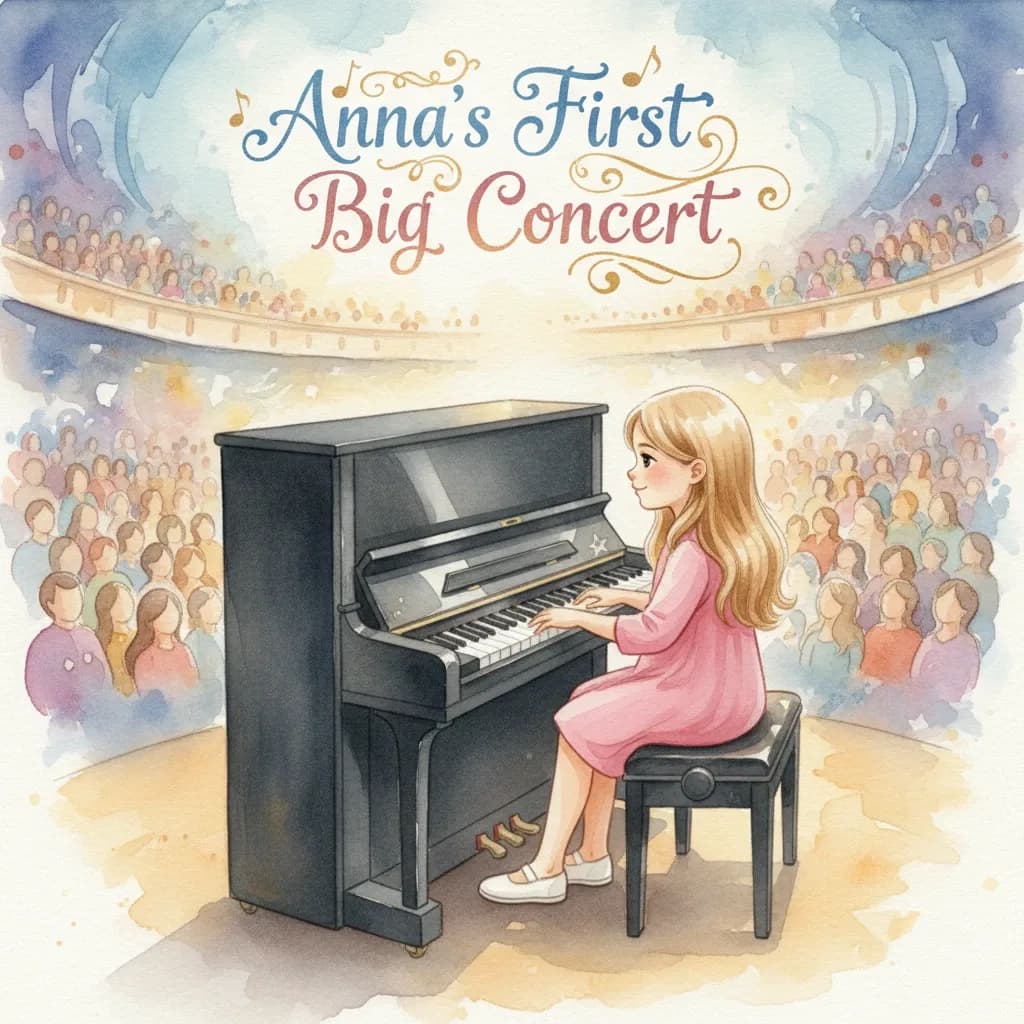
Anna's First Big Concert is a story about that very moment—and what happens when a child chooses to keep trying.
Anna's First Big Concert is a growth mindset story for children ages 3-6 that shows how persistence and practice turn "I can't" into "I did it!" through a young girl's journey to her first piano recital.
A Journey from "Plink Plonk" to Applause
Anna loves music. She twirls to songs, hums in the car, and when a shiny black piano arrives in her living room, her eyes grow wide with possibility. But as any parent who has listened to early piano practice knows, the journey from enthusiasm to skill is paved with many wrong notes.
At first, Anna presses keys eagerly—"PLINK PLONK CLANG!" The sounds don't match the beautiful music in her head, and her shoulders droop. This is where many children stop. But Anna's story is about what happens when you don't.
Day after day, Anna returns to the piano. She makes a plan: practice a little bit every day. First just her right hand. Then her left. Then both together, even when her fingers bump and tangle. The story captures those small victories—the first time a tune comes out right, the growing strength in her fingers, the pride of finishing a piece all the way through.
The Power of "I Won't Give Up"
What makes this story special is how honestly it portrays the emotional journey of learning something hard. Anna doesn't just struggle once and succeed. She feels disappointed, frustrated, even a little angry. She crosses her arms and mutters "maybe I can't do it."
Then comes the turning point. Anna remembers learning to ride her scooter. She fell, but she kept trying. "I won't give up," she whispers, uncrossing her arms.
This is the growth mindset in action—the understanding that abilities develop through dedication and hard work. Research shows that children who believe they can improve through effort are more resilient and ultimately more successful learners. Anna's story makes this abstract concept tangible for even the youngest readers.
Research shows children with a growth mindset are more resilient learners. Stories that model persistence help children internalize the belief that abilities develop through effort, not just innate talent.
After reading, ask your child: "Can you remember a time when something was hard at first, but you kept trying?" This helps them connect Anna's experience to their own life.
The Psychology of Growth Mindset for Children
The term "growth mindset" comes from psychologist Carol Dweck's groundbreaking research at Stanford University. Her work revealed that children (and adults) tend to hold one of two beliefs about their abilities:
Fixed Mindset vs. Growth Mindset
Fixed mindset: "I'm either good at something or I'm not. If I have to try hard, it means I'm not talented."
Growth mindset: "I can get better at anything through practice and effort. Struggling means I'm learning."
Children with a growth mindset are more likely to:
- Embrace challenges rather than avoid them
- Persist when things get difficult
- See effort as the path to mastery
- Learn from criticism
- Find inspiration in others' success
Anna's story embodies the growth mindset journey. She starts with enthusiasm, hits a wall of frustration, considers giving up, then chooses to persist—and ultimately succeeds not because she's naturally talented, but because she kept trying.
How Stories Shape Mindset
Why use a story to teach growth mindset rather than simply explaining the concept? Because stories engage children emotionally in ways that lectures cannot.
When children read about Anna's frustration, they feel it. When she chooses to keep trying, they experience that choice alongside her. When she finally succeeds, they share her triumph. This emotional engagement creates deeper learning than any explanation could.
This is why stories help children overcome fears and challenges so effectively. Narrative transportation—the experience of being "lost" in a story—allows children to practice emotional responses and behavioral choices in a safe context.
Why Stories About Struggle Help Children Succeed
Many children's stories skip the hard parts. The hero faces a challenge and quickly overcomes it. But Anna's story dwells in the struggle—the frustration, the self-doubt, the temptation to quit.
Normalizing Difficulty
When children see Anna struggle, they learn that struggling is normal. It's not a sign that they're doing something wrong or that they're not smart enough. It's simply part of learning.
This normalization is crucial. Many children interpret struggle as evidence that they should give up. "If it's this hard, I must not be good at it." Anna's story reframes struggle as evidence that they're doing exactly what they should be doing—learning something new.
Modeling Healthy Responses to Frustration
Anna doesn't just push through frustration—she experiences it fully and then makes a conscious choice. She crosses her arms. She mutters "maybe I can't do it." These are realistic responses that children recognize.
Then she remembers a past success (the scooter) and uses that memory to fuel her persistence. This is a real strategy children can use: "I learned to do that hard thing. I can learn to do this too."
The story also shows Anna breaking her big goal into smaller steps—first right hand, then left, then both together. This is another practical strategy that transfers to any learning situation.
When Practice Meets the Big Stage
The story's climax comes when Anna receives a letter inviting her to play at a concert in the big hall. Her heart does "a little jump"—she's excited but also scared. What if she makes a mistake in front of everyone?
Courage Under Pressure
The night of the concert, Anna's knees feel wobbly. The hall is huge, with rows and rows of chairs. But when she sits at the grand piano, something beautiful happens: her fingers remember what to do. She forgets the chairs and the lights. It's just her and the music.
This moment captures something true about mastery: when we've practiced enough, our bodies remember even when our minds are nervous. Anna's success isn't magic—it's the result of all those practice sessions, all those times she chose to keep trying.
The Real Reward
The applause that follows isn't the real reward. The story's final scene shows Anna back at home, playing her special song softly in her cozy room. The big hall was wonderful, but her favorite part is right here—just her, her piano, and "the music she had learned by not giving up."
This ending is important. It shows that the joy of mastery is intrinsic—it comes from the doing, not from external validation. Anna plays because she loves to play, not just because people clap.
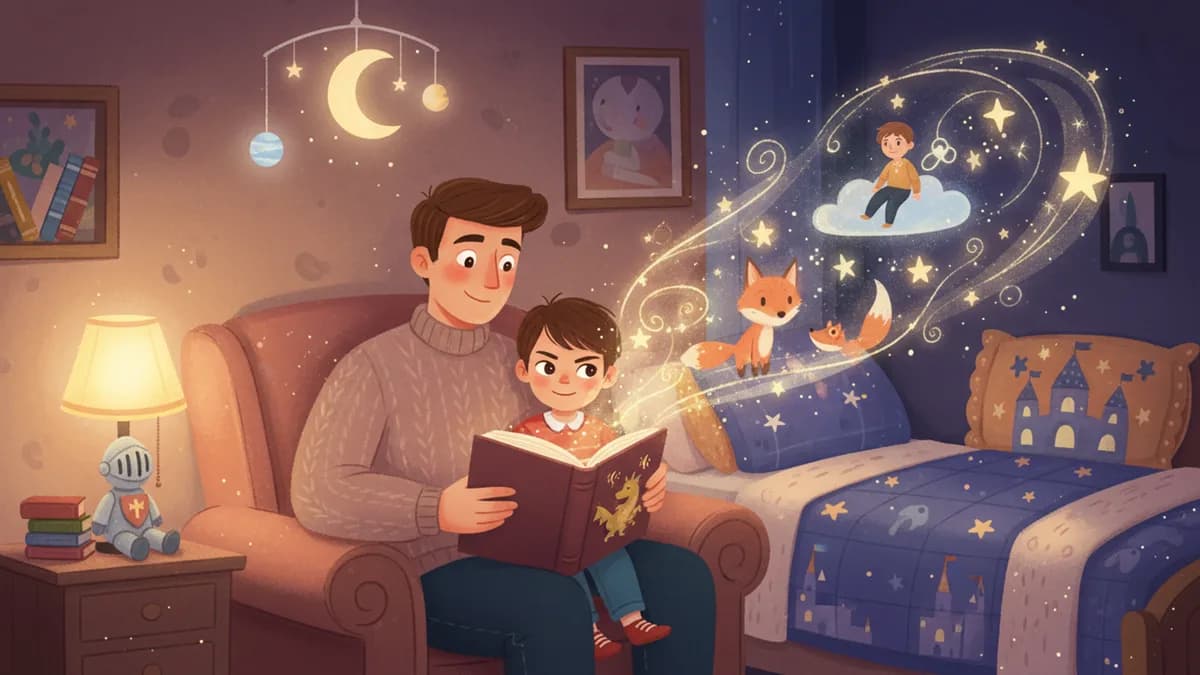
Reading This Story at Bedtime
While Anna's story works anytime, bedtime reading offers unique advantages for growth mindset learning.
Sleep Consolidates Learning
The science of bedtime stories reveals that information processed before sleep is consolidated more effectively into long-term memory. The emotional lessons in Anna's story—that struggle is normal, that persistence pays off—are more likely to "stick" when the story is read at bedtime.
A Calm Context for Big Emotions
Bedtime provides a calm, connected context for exploring emotions like frustration and self-doubt. During the busy day, there's often not time to process these feelings. At bedtime, snuggled safely with a parent, children can explore difficult emotions without feeling rushed.
The story's gentle ending—Anna playing softly in her cozy room—also naturally transitions toward sleep. The triumph is quiet rather than exciting, promoting calm rather than stimulation.
Making It Part of Your Routine
Consider where Anna's story fits in your bedtime routine. Growth mindset stories work well earlier in the routine when children are still alert enough to engage with the emotional content. Save the sleepiest, most soothing books for the final wind-down.
Discussion Questions for Parents
Use these prompts to deepen your child's engagement with Anna's story:
Before Reading
- "Have you ever tried to learn something really hard?"
- "What do you do when something doesn't work the first time?"
During Reading
- "How do you think Anna feels right now?" (at various points)
- "What would you do if you were Anna?"
- "Why do you think Anna remembered her scooter?"
After Reading
- "What helped Anna keep trying when she wanted to give up?"
- "Can you think of something you learned by practicing?"
- "Is there something you're working on that feels hard right now?"
The most powerful conversations happen when you share your own experiences. Tell your child about something you had to practice to learn. Let them see that even adults struggle and persist.
Dreamy Watercolors Bring the Story to Life
The illustrations use a dreamy watercolor style with soft brush strokes, translucent layers, and gentle palettes. This artistic choice perfectly matches the story's emotional tone—warm and encouraging, never harsh.
Why Watercolor Suits Emotional Stories
Watercolor's soft edges and blended colors create a gentle visual experience that supports emotional storytelling. There are no hard lines to suggest rigidity or harshness—only flowing colors that mirror the fluidity of learning and growth.
The translucent layers of watercolor also suggest depth and complexity, much like the emotional journey Anna takes. Light shows through the paint, creating luminosity that feels hopeful and warm.
Visual Storytelling Details
The watercolors capture Anna's feelings without words: the wide eyes of wonder at the new piano, the drooping shoulders of frustration, the warm glow of pride after the concert. Young children often connect with illustrations even more than text, and these images help them recognize and name their own emotions.
Watch how the color palette shifts through the story—cooler tones during struggle, warmer golden hues during success. This visual language reinforces the emotional arc and helps pre-readers follow the story's journey.
Building a Library Around Growth Mindset
Anna's story works beautifully as part of a collection that celebrates persistence, effort, and self-discovery.
Stories That Complement Anna's Journey
Consider pairing this story with others that explore related themes:
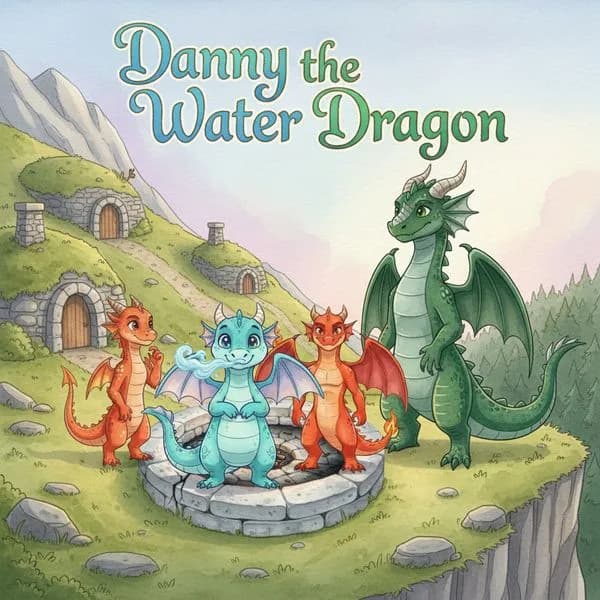
- Stories about celebrating differences — Like Danny the Water Dragon, who discovers his unique ability is actually a gift
- Stories about facing fears — Characters who feel scared but choose to be brave anyway
- Stories about friendship challenges — Learning to make friends or resolve conflicts takes practice too
The best personalized children's books allow you to create custom stories that address your child's specific challenges, making the growth mindset lessons even more personal and powerful.
Beyond Piano: Transferring the Lesson
Anna's story is about piano, but the lesson transfers to anything your child is learning:
- Learning to read: "Remember how Anna practiced a little bit every day?"
- Sports skills: "Anna's fingers didn't work together at first either."
- Making friends: "Sometimes it takes practice to know what to say."
- Academic challenges: "Anna made lots of mistakes before she got it right."
Help your child make these connections explicitly. "This is just like Anna's piano!" becomes a family shorthand for "Keep trying—you'll get there."
Perfect For
Best suited for children ages 3-6 who are learning that effort and practice lead to improvement.
- Ages 3-6 — Simple language with rich emotional content
- Bedtime reading — The gentle ending brings calm and comfort
- Before starting a new activity — Primes children for the idea that struggle is part of learning
- Children who get frustrated easily — Models healthy ways to handle disappointment
- Young music lovers — Introduces the joy of practice and performance
- Kids starting school — Prepares them for the challenges of learning to read and write
- Children comparing themselves to others — Shows that everyone has their own learning journey
- Families wanting to build resilience — Provides language and examples for growth mindset conversations
Your Child as the Hero
Every child deserves to see themselves as the hero of their own story. With Lullaby, you can create a personalized tale where your child learns to ride a bike, makes a new friend, conquers their fear of swimming, or achieves their own "big concert" moment.
When children see themselves overcoming challenges in stories, it builds their confidence to try in real life. The neural pathways activated by imagining success are similar to those activated by actual success—so in a sense, your child practices succeeding every time they read their personalized story.
What is your child working hard to learn right now? That struggle could become the foundation of their very own perseverance story—complete with the frustration, the turning point, and the ultimate triumph.
Want to learn more about how stories support child development? Explore the science of bedtime stories and discover how stories help children overcome fears and challenges.